Bitcoin
SEC and CFTC Release Joint Guidance: Most Cryptocurrencies Are Not Securities


In a landmark joint statement issued late Friday, the U.S. Securities and Exchange Commission (SEC) and the Commodity Futures Trading Commission (CFTC) have provided long-awaited clarity on the regulatory classification of digital assets, concluding that the vast majority of cryptocurrencies are commodities, not securities.
The 18-page guidance document, titled “Clarifying the Application of the Federal Securities Laws to Digital Assets,” represents the agencies’ most comprehensive and coordinated position to date. It explicitly states:
“Absent facts indicating an investment contract under the Howey test—such as a centralized issuer promising profits from the efforts of others—the token itself, once distributed and functioning primarily as a medium of exchange or store of value on a decentralized network, is generally a commodity subject to CFTC jurisdiction rather than a security under SEC purview.”
The statement lists several key factors that support commodity status for most cryptocurrencies:
- Decentralization — Tokens operating on fully decentralized networks with no ongoing central promoter or issuer exerting significant managerial effort.
- Functional utility — Use as a medium of exchange, unit of account, or store of value within the protocol.
- Market-driven pricing — Value determined predominantly by supply, demand, and network usage rather than issuer promises.
- Absence of investment contract characteristics — No expectation of profits derived primarily from the efforts of a third party after initial distribution.
Bitcoin and Ethereum are cited as clear examples of commodities, consistent with prior CFTC and court rulings. The agencies also indicate that many Layer-1 tokens, major stablecoins (when fully backed and not promising yield), and widely distributed governance/utility tokens fall outside the definition of securities under current law.
However, the guidance cautions that certain tokens can still be securities, particularly:
- Tokens sold in investment-style offerings with profit expectations tied to issuer efforts.
- Centralized staking-as-a-service products promising yields.
- Certain NFTs or fractionalized assets marketed with investment characteristics.
- Tokens tied to ongoing centralized development teams that retain significant control.
The joint statement emphasizes coordination between the SEC and CFTC to avoid regulatory overlap, with the CFTC taking primary jurisdiction over spot commodity transactions and derivatives, while the SEC retains authority over fraud, manipulation, and investment-contract offerings. Both agencies committed to continued collaboration on enforcement and future rulemaking.
Market reaction was swift and positive. Bitcoin rose above $73,000 in late trading, Ethereum gained over 3%, and many altcoins posted double-digit percentage increases as the “most crypto are not securities” headline circulated. Trading volume spiked across major exchanges, with analysts noting immediate relief among developers, projects, and institutional allocators who had previously operated under uncertainty.
Industry leaders welcomed the guidance as a turning point. “This is the clearest signal yet that the U.S. intends to treat decentralized crypto networks as commodities, not unregistered securities,” said a senior policy advisor at a major crypto trade association. “It removes a massive overhang that has suppressed innovation and capital formation for years.”
The statement arrives amid ongoing legislative efforts (including the House-passed stablecoin bill now in the Senate) and follows a series of court decisions and enforcement actions that had gradually narrowed the SEC’s broadest interpretations of the Howey test. While not legally binding rulemaking, the joint guidance carries significant weight and is expected to influence future enforcement discretion, registration decisions, and private litigation.
Investors and projects will now closely monitor implementation—particularly how the agencies apply the framework to edge cases, staking products, and emerging token designs. For the broader market, however, the message is unambiguous: most functioning cryptocurrencies are commodities under U.S. law.
Cryptocurrency markets remain highly volatile—prices can shift rapidly on regulatory news, macro data, and sentiment. Always verify the latest official statements from sec.gov, cftc.gov, and trusted news sources before making investment decisions.

The content on CoinReporter.io is for informational purposes only and is not financial or investment advice. Cryptocurrency investments are highly volatile and risky. Always conduct your own research and consult a qualified financial advisor before making any investment decisions. CoinReporter.io and its authors are not liable for any losses resulting from actions based on this website’s content.





U.S. spot Bitcoin ETFs recorded additional net outflows (figures cited in the $95 million range for one recent session, with multi-day and November totals in the hundreds of millions and year-to-date 2026 redemptions exceeding $1 billion in multiple reports). Ethereum ETFs also saw outflows, though generally smaller. BlackRock’s IBIT was frequently the largest contributor.
The flows coincided with hotter inflation data, elevated Fed hike probabilities, and broader risk-off tones. Net assets in the Bitcoin ETF complex remained substantial, but the sustained redemptions marked a clear reversal from the strong inflow years of prior cycles. Analysts watched whether the pace would moderate if rate expectations stabilize.
Sources: Bitcoin.com News, Blockonomi, Decrypt.


Bitcoin Tests $75,200 Support
Total crypto market capitalization hovered near $2.50–2.54 trillion on November 9, 2026. Bitcoin dominance remained elevated at roughly 59–60%. The...


Bitcoin Slips Toward $74,600
Bitcoin traded in a tight range near $75,000–$76,000 for much of November 8 before settling lower, closing the CoinMarketCap snapshot...


Bitcoin Crashes Toward $75K
Bitcoin closed November 6 near $75,900 after an intense sell-off that pushed it as low as roughly $74,800 intraday—its weakest...


Crypto Market Stabilizes After Sharp Dip
Bitcoin recovered from multi-week lows near $75,200 and stabilized above $76,000 on November 6, 2026, as the market absorbed a...


Elizabeth Warren Expected to Chair Senate Banking Committee After Democratic Midterm Sweep
Longtime crypto critic Senator Elizabeth Warren is positioned to lead the powerful Senate Banking Committee when the new Congress convenes...


Bitcoin Dips to Multi-Week Lows Near $75,200 Before Recovering Above $76,000
Bitcoin briefly tumbled below $76,000 on November 6, 2026, reaching multi-week lows near $75,200 before buyers stepped in and the...


Bitcoin Rebounds Past $80,000 as Midterms Conclude and Markets Digest Binance Hack Details
Bitcoin staged a sharp V-shaped recovery on November 4, reclaiming $80,000 after briefly touching a seven-week low near $75,600–$75,700. The...


Bitcoin Volatility and ETF Outflows Amid Elections and Hack Fallout
Bitcoin experienced sharp swings in early November, dipping below $76,000 to multi-week lows near $75,700 as residual fallout from the...


Binance SAFU Fund Falls Below $800 Million Threshold After Record Hack Coverage
Binance has drawn down roughly half of its Secure Asset Fund for Users (SAFU), leaving the Bitcoin reserve near 7,500...


Bitcoin Falls Below $77,000 as Chip Stocks Sell Off Ahead of U.S. Midterms
Bitcoin traded under $77,000 on November 3, 2026, down roughly 2% over 24 hours, as a deepening sell-off in semiconductor...
-

 Bitcoin1 month ago
Strategy (MicroStrategy) Adds 250 Bitcoin, Holdings Reach 848,250 BTC
-

 DeFi1 month ago
Bitcoin Drops Below $82,000 Amid $770M+ in Liquidations as Volatility Spikes
-

 DeFi4 weeks ago
U.S. Spot Bitcoin and Ethereum ETFs See Significant Weekly Outflows
-
DeFi1 month ago
Bitcoin Holds Above $84,000, Shrugging Off Heavy ETF Outflows as Oil Declines
-
 DeFi4 weeks ago
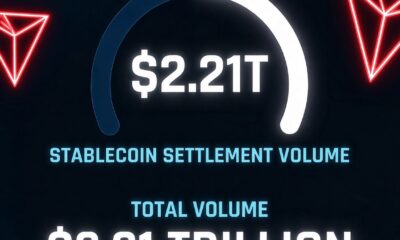
TRON Q3 2026 Report: $2.21 Trillion in Stablecoin Settlement Volume
-

 DeFi2 weeks ago
LUNC Hits 462B Burned After v4.1.1 Upgrade
-

 DeFi3 weeks ago
Arbitrum Rallies on Stablecoin Growth Program as DeFi Tokens Outperform
-
 DeFi4 weeks ago
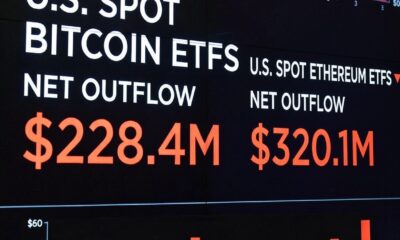
Bitcoin and Ethereum Spot ETFs Record Substantial Weekly Outflows
-

 DeFi3 weeks ago
BNB Standard Corporation
-

 DeFi4 weeks ago
Nine Crypto Firms Launch Quantum Alliance to Set Post-Quantum Standards
-

 DeFi1 month ago
South Korea Blocks Domestic Access to 27 Unregistered Crypto Exchange Websites, Including KuCoin and MEXC
-
 DeFi3 weeks ago
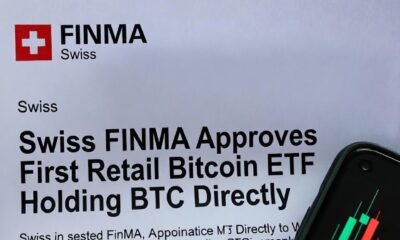
Swiss FINMA Approves First Retail Bitcoin ETF Holding BTC Directly
-

 DeFi3 weeks ago
U.S. Spot Bitcoin ETFs Post Best Inflow Day in Nearly a Month
-

 DeFi3 weeks ago
World Liberty Financial’s USD1 Stablecoin Sheds Over $400 Million in Market Cap Amid Redemptions
-

 DeFi4 weeks ago
Inflation Shock Triggers Nearly $1 Billion in Liquidations as Bitcoin Tests $80,000
-

 DeFi3 weeks ago
Binance-Linked Transfer Triggers 347 Million LUNC Burn
-

 DeFi4 weeks ago
Ethereum Foundation-Linked Wallets Transfer 4,393 ETH (~$11 Million) to Kraken
-

 DeFi3 weeks ago
Strive Discloses Additional Bitcoin Purchases, Holdings Reach 36,818 BTC
-

 Crypto2 weeks ago
DTCC Launches Tokenization Service Covering Approximately $30 Trillion in Securities
-

 DeFi4 weeks ago
Binance Rolls Out AI Trading Interface Globally After 150,000-User Beta
-

 DeFi3 weeks ago
Crypto Hacks and Losses Reach $1.18 Billion in Q3 2026 Across 107 Incidents
-

 Crypto2 weeks ago
Memecoin PEPE Rallies on Reported Large Holdings Linked to Justin Sun; Broader Tokenization Debate Continues
-

 DeFi3 weeks ago
Crypto Liquidations Surge Past $400 Million in Hours as Bitcoin Briefly Dips Below $80,000
-

 DeFi2 weeks ago
Ripple Secures Final OCC Approval for National Trust Bank to Oversee RLUSD
-

 Bitcoin2 weeks ago
Federal Reserve Holds Rates Steady as Bitcoin Trades Near $80,000; December Hike Odds Rise
-

 DeFi3 weeks ago
Bitcoin Slides Below $81,500 as Tech Sell-Off and Elevated Oil Prices Hit Risk Assets
-

 DeFi4 weeks ago
Bitcoin Drops Below $81,000 as Hotter U.S. CPI Revives Rate-Hike Fears and Asian Equities Tumble
-

 DeFi3 weeks ago
Strive Adds $335 Million in Bitcoin to Corporate Treasury
-

 DeFi3 weeks ago
Mt. Gox Extends Creditor Repayment Deadline to October 2027
-

 DeFi3 weeks ago
Strategy Adds 267 Bitcoin for $22.1 Million, Bringing Holdings to 848,517 BTC
-

 DeFi3 weeks ago
JPMorgan Expands JPM Coin Deposit Token to Ethereum Mainnet for Institutional Clients
-

 DeFi4 weeks ago
Circle Targets 40 Emerging Markets
-

 DeFi3 weeks ago
BlackRock Files for “Buffer” Bitcoin ETF (Ticker: PBIT)
-

 DeFi2 weeks ago
Stablecoin Issuers and Partners Freeze Billions Linked to Binance Incident
-

 DeFi3 weeks ago
Mastercard Advances AI Agent Payments
-

 Crypto2 weeks ago
Hyperliquid Permanently Burns Nearly 5% of Maximum HYPE Supply Amid Broader Token Burn Trends