DeFi
LUNC Hits 462B Burned After v4.1.1 Upgrade


As of late October 2026, Terra Classic (LUNC) has burned approximately 462.5 billion tokens—about 6.7% of its roughly 6.445 trillion total supply—while completing a key network upgrade aimed at improving reliability.
Network and Burn Updates
On 26 October 2026, the chain activated Core v4.1.1 at block height 31,010,600. The upgrade fixed “ghost” or stuck transactions that could lock an account from further activity and restored functionality to certain vesting accounts. It was a stability and maintenance release with no changes to tokenomics, the burn tax, or supply mechanics, following earlier security patches such as the September 2026 wasmd/wasmvm fix.
The on-chain burn tax remains at 1.5%, raised from 0.5% through Proposal 12223 in early August 2026. Of each taxed on-chain transfer, roughly 1.2% is burned, 0.15% goes to the Community Pool, and 0.15% to the Oracle Pool. The tax applies only to transactions on the Terra Classic chain itself (not CEX trades). While the higher rate has increased daily burn volume, its absolute impact remains limited by the multi-trillion supply.
Trackers put total burns at ~462.5 billion LUNC as of around 29 October. Common breakdowns show on-chain tax burns of roughly 100–102 billion, Binance fee burns of 88–91 billion, and direct or community wallet burns of about 272 billion. Circulating supply sits near 5.52–5.53 trillion. Recent daily on-chain burns have ranged from tens of millions to occasional large spikes (sometimes 300 million or more tied to big wallet activity), with averages often landing in the 80–280 million range. October opened strongly, with hundreds of millions burned in the first few days.
Binance continues its monthly fee burns. On 1 October it burned about 334.8 million LUNC based on August trading fees, adding to its cumulative total (commonly tracked in the high 80B to low 90B range). Binance remains one of the largest consistent burn contributors alongside the on-chain tax.
Community governance is ongoing, with proposals covering upgrades, Hyperlane cross-chain connectivity to Ethereum, BSC, and Solana, and longer-term burn ideas. Staking remains active with modest APR. Price action has stayed mixed relative to burn headlines, as is typical given the still-enormous supply.
Recent discussion on X has focused on daily burn trackers, the practical improvements from v4.1.1, Binance’s continued support, and debates over whether the 1.5% tax is sustainable or overly burdensome for activity. No major new protocol-level announcements beyond the upgrade and routine burns appeared in the latest posts.
Key Benefits and Mechanisms
The main structural features include:
- Deflationary pressure: Continuous reduction from the 1.5% on-chain tax (primarily the 1.2% burn portion), Binance’s monthly trading-fee burns, and voluntary community burns. This slowly shrinks circulating and total supply (recent 90-day estimates around –0.12% to –0.17% net in some analyses). Higher volume or more exchange participation would accelerate the process.
- Community governance and development: Active on-chain voting drives upgrades for security and reliability (such as the recent v4.1.1 fixes), parameter changes, and infrastructure proposals including Hyperlane bridges for better cross-chain access. The chain continues under community control after the 2022 collapse.
- Staking rewards: Holders can stake LUNC for rewards (APR typically in the low single digits recently). Staked tokens help secure the network and are subject to an unbonding period.
- Exchange support: Binance’s consistent fee-based burns provide a reliable external source of supply reduction and keep LUNC listed and traded. Other venues have contributed smaller burns over time.
- Ecosystem angles: Tax proceeds partially fund the Community and Oracle pools. Cross-chain work aims to improve connectivity, some community projects route activity into burns, and longer-term proposals explore faster supply reduction or USTC-related mechanics (these remain speculative).
The supply is still measured in trillions, so even hundreds of millions burned daily represent a gradual process. Historical analyses have noted multi-decade or longer timelines at current rates to meaningfully halve supply. Price impact depends heavily on broader demand, trading volume, Bitcoin and market sentiment, and actual on-chain usage—not burns alone. LUNC remains a high-risk, community-driven recovery story from the 2022 Terra collapse.
Sources include LuncScan and LUNCMetrics-style trackers, CoinMarketCap summaries, governance records, and contemporaneous community reporting on X and sites such as LuncDaily. Figures fluctuate with new burns and can vary slightly by tracker; always verify against on-chain explorers for the absolute latest. Not financial advice.



The content on CoinReporter.io is for informational purposes only and is not financial or investment advice. Cryptocurrency investments are highly volatile and risky. Always conduct your own research and consult a qualified financial advisor before making any investment decisions. CoinReporter.io and its authors are not liable for any losses resulting from actions based on this website’s content.





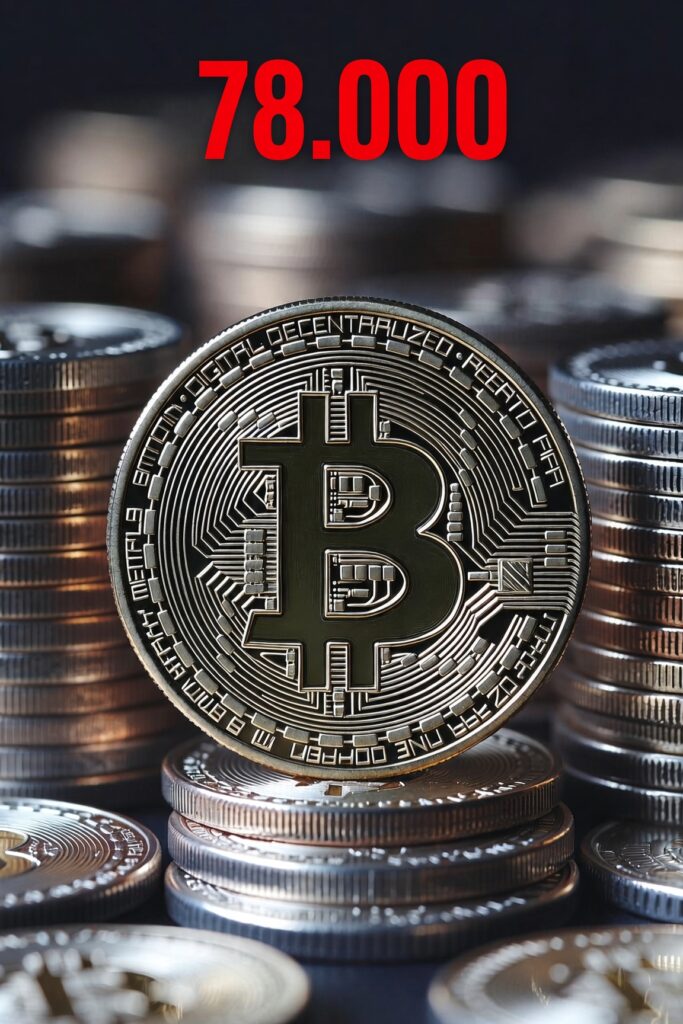
Bitcoin fell below $78,000 on October 30, 2026, as confirmation of the Binance security incident accelerated a broader risk-off move across crypto markets.
On CoinMarketCap, Bitcoin traded at $78,430 with a market capitalization of approximately $1.57 trillion, down roughly 2% over the prior 24 hours and more sharply from earlier levels near $81,000–$82,000. The decline pushed BTC to its weakest levels in more than a month, with some reports showing brief tests of the mid-$76,000s during the sharpest phase of the sell-off.
The drop intensified after Binance disclosed the estimated $6.3 billion hot-wallet breach late on October 29. Leveraged liquidations amplified the move, with figures ranging from hundreds of millions to more than $1 billion in 24-hour windows depending on the snapshot and venue. Broader risk aversion linked to technology-stock weakness and a hawkish tone from the Federal Reserve added to the pressure.
Bitcoin dominance remained elevated, indicating that capital was rotating out of higher-beta assets rather than exiting the crypto market entirely. Analysts highlighted key support clusters in the $77,000–$79,000 range, while resistance stayed firm above $81,000–$85,000. The incident’s market impact is still unfolding as investigations continue and further details on frozen assets and potential recoveries emerge.


Bitcoin Slides Below $78,000 as Risk-Off Sentiment Intensifies
Bitcoin fell below $78,000 on October 30, 2026, as confirmation of the Binance security incident accelerated a broader risk-off move...


Stablecoin Issuers and Partners Freeze Billions Linked to Binance Incident
Stablecoin issuers and blockchain partners moved rapidly to freeze billions of dollars in assets tied to the Binance security incident...


Binance Suffers Record $6.3 Billion Security Incident — Largest Crypto Heist in History
Binance, the world’s largest cryptocurrency exchange, confirmed a major security breach late on October 29, 2026, with an estimated impact...


LUNC Hits 462B Burned After v4.1.1 Upgrade
As of late October 2026, Terra Classic (LUNC) has burned approximately 462.5 billion tokens—about 6.7% of its roughly 6.445 trillion...

Hyperliquid Permanently Burns Nearly 5% of Maximum HYPE Supply Amid Broader Token Burn Trends
Hyperliquid has permanently burned 49.87 million HYPE tokens, representing 4.99% of the token’s 1 billion maximum supply and valued at...


Moody’s Assigns Investment-Grade A2 Rating to Ripple’s RLUSD; Coinbase Lists the Stablecoin
Moody’s Ratings assigned Ripple USD (RLUSD) an A2 long-term deposit rating and a P-1 short-term deposit rating on October 27,...


Google Cloud Unveils Multi-Party Computation Custody Service for Banks
Google Cloud introduced Google Multi-Party Compute (MPC), a dedicated institutional custody product for cryptocurrencies and tokenized assets, at its first...


Federal Reserve Holds Rates Steady as Bitcoin Trades Near $80,000; December Hike Odds Rise
The Federal Reserve left interest rates unchanged on October 28, 2026, holding the federal funds target range at 3.75% to...


Aviva Investors Tokenizes £22 Billion
LONDON — October 26, 2026 — Aviva Investors, the asset-management arm of UK insurer Aviva, launched a tokenized share class...


Ripple Secures Final OCC Approval for National Trust Bank to Oversee RLUSD
SAN FRANCISCO / WASHINGTON — October 26, 2026 — Ripple received final approval from the U.S. Office of the Comptroller...
-

 Crypto3 weeks ago
ESMA gives EU crypto firms three months to exit non-MiCA stablecoins
-

 Crypto4 weeks ago
Binance Burns 334.88 Million LUNC in October Fee Batch as Second Transaction Lifts the Day’s Total
-

 DeFi4 weeks ago
Hong Kong Moves Licensed Stablecoins Onto Exchanges and Into Fund Settlement
-

 Bitcoin3 weeks ago
Strategy (MicroStrategy) Adds 250 Bitcoin, Holdings Reach 848,250 BTC
-

 Bitcoin4 weeks ago
SEC clears listing path for first U.S. 3x Bitcoin and Ether ETFs
-

 DeFi4 weeks ago
TOKEN2049 Opens in Singapore Next Week as the City Leads Regional Crypto Flow
-

 DeFi4 weeks ago
HSBC Names Its Hong Kong Stablecoin RedCoin, and Starts With PayMe
-

 DeFi3 weeks ago
Bitcoin Drops Below $82,000 Amid $770M+ in Liquidations as Volatility Spikes
-
 DeFi4 weeks ago
Robinhood Puts Hedge-Fund Tools in the App as Macro Turns Softer
-
 Bitcoin3 weeks ago
Bitcoin breaks under $84,000 as oil spikes on Hormuz tanker attacks
-

 Bitcoin1 month ago
Strategy Adds Another 1,665 BTC, Lifting Holdings to 847,666
-

 DeFi4 weeks ago
South Korea Ranks Second in On-Chain Crypto Holdings as the Tax Date Holds
-

 Crypto4 weeks ago
Treasury and FinCEN drop unhosted-wallet and mixer surveillance proposals
-

 Bitcoin1 month ago
Coinbase Receives CFTC Approval for U.S. Derivatives Clearinghouse
-

 DeFi3 weeks ago
Government-linked wallets move seized coins
-

 Crypto4 weeks ago
Singapore Reclaims the Regional Crypto Lead at $284 Billion as the Rest of CSAO Shrinks
-

 DeFi4 weeks ago
BTSE Receives a Full Licence to Trade and Custody Crypto in Bhutan
-

 Bitcoin3 weeks ago
Spot bitcoin ETFs flip to a ~$487 million outflow
-

 DeFi3 weeks ago
Winklevoss files a 0.25% Zcash ETF
-

 DeFi3 weeks ago
Bitcoin Holds Above $84,000, Shrugging Off Heavy ETF Outflows as Oil Declines
-

 Bitcoin3 weeks ago
Bitcoin loses $84,000 as Hormuz attacks lift oil and yields
-

 DeFi2 weeks ago
U.S. Spot Bitcoin and Ethereum ETFs See Significant Weekly Outflows
-

 DeFi3 weeks ago
Uptober stalls ahead of the Fed minutes
-

 DeFi1 month ago
Quant Surges After Selection for U.S. Bank On-Chain Payments Initiative
-
 Crypto4 weeks ago
CFTC opens Regulation CTX and CAM after Clarity Act stalls
-

 Crypto3 weeks ago
Ether funds were already bleeding
-
 DeFi2 weeks ago
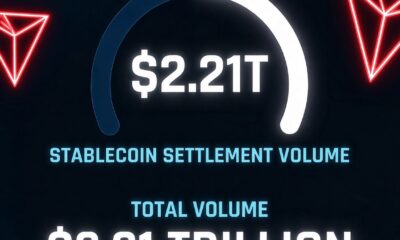
TRON Q3 2026 Report: $2.21 Trillion in Stablecoin Settlement Volume
-

 Bitcoin1 month ago
Spot Bitcoin ETFs Record Strongest Weekly Inflows of 2026, Flipping Year-to-Date Flows Positive
-
 DeFi1 month ago
Bitget Puts $300 Million Protection Fund Back After Hack
-
 DeFi2 weeks ago
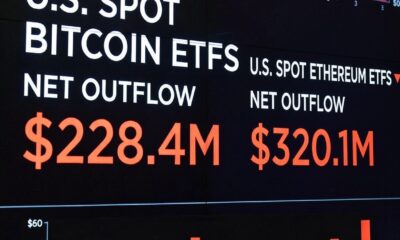
Bitcoin and Ethereum Spot ETFs Record Substantial Weekly Outflows
-

 Bitcoin4 weeks ago
Bitcoin rejected again under $87,400 as Uptober stalls
-

 Bitcoin3 weeks ago
Third rejection at $87,000 while stocks print records
-

 DeFi1 week ago
Arbitrum Rallies on Stablecoin Growth Program as DeFi Tokens Outperform
-

 Crypto3 weeks ago
Treasuries, triple leverage, a testnet fork, and a bank app
-

 DeFi1 month ago
Bitget Raises Breach Estimate to $387.5 Million; Phased Withdrawals Begin September 28
-

 DeFi1 week ago
BNB Standard Corporation