Crypto
Binance Completes 48th Monthly LUNC Burn as BNB Chain Marks Six Years


Binance opened September the same way it has opened most months since the Terra collapse: by sending LUNC to a burn address.
On September 1 the exchange completed its 48th monthly Terra Classic burn, destroying 334.87 million LUNC. Community trackers put Binance’s cumulative contribution above 87.76 billion LUNC on the day of the print; LUNC Metrics later showed Binance wallets near 89.5 billion when on-chain fee burns are included — about 19.6% of all LUNC destroyed since May 2022. Lunc Daily counted more than 300 million already attributed to September as the monthly program continued. The tokens come from eligible LUNC spot and margin trading fees. More volume, more burn. That is the whole mechanism.
What 335 million coins actually does
It is not a supply shock.
Terra Classic still has about 5.54 trillion LUNC circulating and 6.45 trillion in total supply. All burns since the May 2022 implosion total roughly 456.9 billion LUNC. Binance is the second-largest burner after Terraform Labs, which sits near 249 billion and more than half of the historical total. August’s network-wide burn was about 2.68 billion. June’s Binance print alone was 2.19 billion when LUNC volume was hotter. September’s opening 335 million is a mid-pack monthly check, not a record. At about $0.000052, LUNC’s market cap is near $288 million. Destroying a few hundred million tokens does not reprice a multi-trillion float. It is a drip.
The drip is still the most reliable exchange-side commitment the LUNC community has. Fees convert, tokens leave the float, the wallet list updates. Other venues — Bitkub, MEXC, KuCoin, Bybit — add smaller streams. On-chain tax burns and community donations fill the rest. Net supply over the last year has only edged down about 0.2% once community-pool movements are counted. Burns work. They work slowly.
That is the honest frame. A 48-month streak from the world’s largest exchange is operational support, not a new tokenomic design. LUNC trades like a memorial with a fee sink attached. Holders who treat each first-of-month burn as a catalyst have been disappointed before. Holders who treat it as a scheduled reduction in an oversized supply are watching the only part of the story that still compounds.
BNB Chain turns six — and that part is true
The same week, BNB Chain is celebrating a real birthday.
Binance Smart Chain produced its first block on September 1, 2020. Six years later the official account is running a #6YearsOfBNBChain campaign through September 7: limited-edition gift boxes, a “still __” prompt, winners on September 8. Chinese-language channels marked the anniversary the same day — “six years ago today, BNB Chain produced its first block.” Coverage also called the chain a leader in tokenized equities as the RWA trade accelerated. The anniversary is not a marketing invention. It is a calendar fact.
The chain that started as Binance’s Ethereum side door is now a consumer-scale settlement network. A VanEck note earlier this year put monthly active users near 34 million as of May, up 72% year over year, with about $127 billion in peer-to-peer stablecoin volume that month and a median fee under half a cent. Official anniversary copy points at 200,000-plus AI agents, 300,000-plus RWA holders, tokenized funds and stocks, and the usual DeFi-meme-perp stack. Zero-downtime claims through 2025 and into 2026 are part of the pitch. The 2026 roadmap still talks about a next-generation trading chain aimed at extreme throughput later in the decade.
BNB itself has spent the week in the high-$680s to low-$690s in recent snapshots, a large-cap that no longer needs an anniversary to justify a book. The six-year mark is useful as a reminder of how long “cheap EVM” has been in production — long enough to outlast several L1 cycles and to become one of the default rails for tokenized stocks and stablecoin payments outside the U.S.
Why the two stories sit in the same article
They are the same company, two different supply machines.
On Terra Classic, Binance is a fee-funded incinerator. On BNB Chain, Binance is the founding distribution and still the gravitational center of liquidity, listings, and users. One program subtracts a dead chain’s leftover float. The other marks six years of a live chain that now settles tokenized Apple and Tesco lookalikes next to memecoins. Putting them in one note is not a category error. It is how Binance actually shows up in September 2026: burning LUNC on the first of the month, throwing a birthday for the chain that made BNB more than an exchange token.
Neither print is a price thesis by itself. LUNC’s 335 million is a rounding error on 5.5 trillion. BNB Chain’s sixth year does not change the macro tape of 4.8% Treasury yields and $95 oil. What they do confirm is continuity. The burn calendar is still running. The chain that launched in 2020 is still producing blocks — and still large enough to throw a week-long party with gift boxes.
Next checkpoints are small. Whether September’s full Binance LUNC total stays near 300–400 million or jumps if spot volume returns. Whether the anniversary campaign is only merch or comes with a product week. And whether anyone outside the LUNC Telegram treats the 48th burn as news. The chain that turned six does not need that treatment. The token that is still being burned, month after month, does.

The content on CoinReporter.io is for informational purposes only and is not financial or investment advice. Cryptocurrency investments are highly volatile and risky. Always conduct your own research and consult a qualified financial advisor before making any investment decisions. CoinReporter.io and its authors are not liable for any losses resulting from actions based on this website’s content.


The post ApeCoin (APE) Price Prediction 2026, 2027–2030: Will ApeChain Drive a Massive Comeback? appeared first on Coinpedia Fintech News
Story Highlights The live price of Apecoin is . With 90% supply unlocked, inflation pressure eases. If adoption improves, APE could target $0.2419 short term and $0.4821 by 2026. Long-term outlook to 2030 depends on metaverse success, gaming growth, and DAO utility, with projections ranging from $2.2 to $16. ApeCoin didn’t start as just another …


Bitcoin Rebounds Past $80,000 as Midterms Conclude and Markets Digest Binance Hack Details
Bitcoin staged a sharp V-shaped recovery on November 4, reclaiming $80,000 after briefly touching a seven-week low near $75,600–$75,700. The...


Bitcoin Volatility and ETF Outflows Amid Elections and Hack Fallout
Bitcoin experienced sharp swings in early November, dipping below $76,000 to multi-week lows near $75,700 as residual fallout from the...


Binance SAFU Fund Falls Below $800 Million Threshold After Record Hack Coverage
Binance has drawn down roughly half of its Secure Asset Fund for Users (SAFU), leaving the Bitcoin reserve near 7,500...


Bitcoin Falls Below $77,000 as Chip Stocks Sell Off Ahead of U.S. Midterms
Bitcoin traded under $77,000 on November 3, 2026, down roughly 2% over 24 hours, as a deepening sell-off in semiconductor...


U.S. Spot Bitcoin ETFs See Multi-Hundred-Million Outflows as Post-Hack Caution Weighs
U.S. spot Bitcoin ETFs recorded substantial net outflows in the sessions surrounding the Binance security incident, with redemptions totaling roughly...


Binance Faces $3.6B Outflows as FBI Ties Record Hack to North Korea
Binance processed a net $3.64 billion in customer withdrawals in the first 9.5 hours after it resumed phased withdrawals on...


Binance Resumes Phased Withdrawals After Covering 95% of $6.3 Billion Hack
Binance restarted withdrawals in phases beginning November 1, 2026, after stating it had covered approximately 95% of the roughly $6.3...
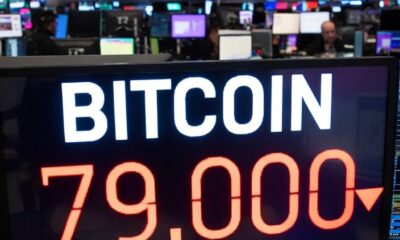

Bitcoin Claws Back Toward $79,000 as Markets Digest Record Binance Hack
Bitcoin extended its recovery for a third consecutive day on November 1–2, 2026, trading at $78,248.45 on CoinMarketCap and pushing...


Bitcoin Slides Below $78,000 as Risk-Off Sentiment Intensifies
Bitcoin fell below $78,000 on October 30, 2026, as confirmation of the Binance security incident accelerated a broader risk-off move...


Stablecoin Issuers and Partners Freeze Billions Linked to Binance Incident
Stablecoin issuers and blockchain partners moved rapidly to freeze billions of dollars in assets tied to the Binance security incident...
-

 Crypto4 weeks ago
ESMA gives EU crypto firms three months to exit non-MiCA stablecoins
-

 Crypto1 month ago
Binance Burns 334.88 Million LUNC in October Fee Batch as Second Transaction Lifts the Day’s Total
-

 Bitcoin3 weeks ago
Strategy (MicroStrategy) Adds 250 Bitcoin, Holdings Reach 848,250 BTC
-

 Bitcoin1 month ago
SEC clears listing path for first U.S. 3x Bitcoin and Ether ETFs
-

 DeFi3 weeks ago
Bitcoin Drops Below $82,000 Amid $770M+ in Liquidations as Volatility Spikes
-
 Bitcoin4 weeks ago
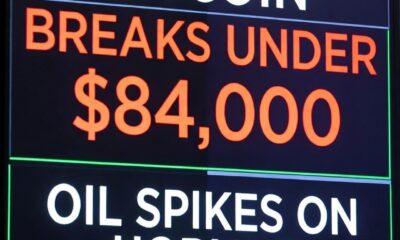
Bitcoin breaks under $84,000 as oil spikes on Hormuz tanker attacks
-

 DeFi4 weeks ago
Government-linked wallets move seized coins
-

 Crypto1 month ago
Treasury and FinCEN drop unhosted-wallet and mixer surveillance proposals
-

 Bitcoin4 weeks ago
Spot bitcoin ETFs flip to a ~$487 million outflow
-

 Bitcoin4 weeks ago
Bitcoin loses $84,000 as Hormuz attacks lift oil and yields
-

 DeFi4 weeks ago
Winklevoss files a 0.25% Zcash ETF
-

 DeFi3 weeks ago
U.S. Spot Bitcoin and Ethereum ETFs See Significant Weekly Outflows
-
DeFi4 weeks ago
Bitcoin Holds Above $84,000, Shrugging Off Heavy ETF Outflows as Oil Declines
-

 DeFi4 weeks ago
Uptober stalls ahead of the Fed minutes
-

 Crypto1 month ago
CFTC opens Regulation CTX and CAM after Clarity Act stalls
-

 Crypto4 weeks ago
Ether funds were already bleeding
-
 DeFi3 weeks ago
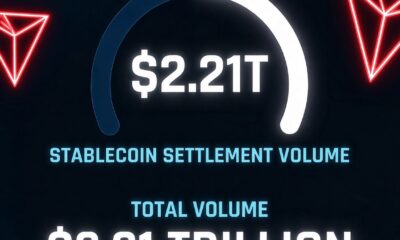
TRON Q3 2026 Report: $2.21 Trillion in Stablecoin Settlement Volume
-

 DeFi2 weeks ago
Arbitrum Rallies on Stablecoin Growth Program as DeFi Tokens Outperform
-
 DeFi3 weeks ago
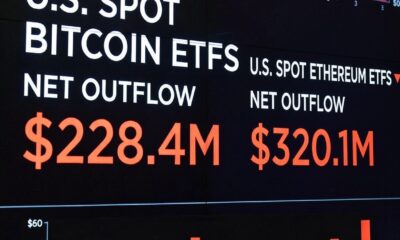
Bitcoin and Ethereum Spot ETFs Record Substantial Weekly Outflows
-
Bitcoin1 month ago
Bitcoin rejected again under $87,400 as Uptober stalls
-

 Bitcoin4 weeks ago
Third rejection at $87,000 while stocks print records
-

 DeFi2 weeks ago
BNB Standard Corporation
-

 Crypto4 weeks ago
Treasuries, triple leverage, a testnet fork, and a bank app
-

 DeFi3 weeks ago
Nine Crypto Firms Launch Quantum Alliance to Set Post-Quantum Standards
-
 DeFi2 weeks ago
Swiss FINMA Approves First Retail Bitcoin ETF Holding BTC Directly
-

 DeFi3 weeks ago
South Korea Blocks Domestic Access to 27 Unregistered Crypto Exchange Websites, Including KuCoin and MEXC
-

 DeFi1 week ago
LUNC Hits 462B Burned After v4.1.1 Upgrade
-

 DeFi2 weeks ago
World Liberty Financial’s USD1 Stablecoin Sheds Over $400 Million in Market Cap Amid Redemptions
-

 DeFi2 weeks ago
Strive Discloses Additional Bitcoin Purchases, Holdings Reach 36,818 BTC
-
 DeFi2 weeks ago
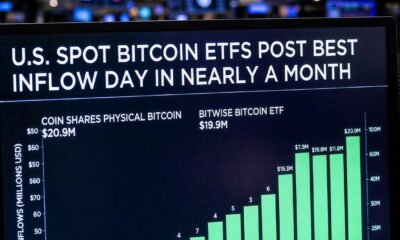
U.S. Spot Bitcoin ETFs Post Best Inflow Day in Nearly a Month
-

 DeFi3 weeks ago
Ethereum Foundation-Linked Wallets Transfer 4,393 ETH (~$11 Million) to Kraken
-

 DeFi3 weeks ago
Inflation Shock Triggers Nearly $1 Billion in Liquidations as Bitcoin Tests $80,000
-

 DeFi2 weeks ago
Binance-Linked Transfer Triggers 347 Million LUNC Burn
-

 DeFi3 weeks ago
Binance Rolls Out AI Trading Interface Globally After 150,000-User Beta
-
 DeFi2 weeks ago
Crypto Hacks and Losses Reach $1.18 Billion in Q3 2026 Across 107 Incidents
-

 DeFi2 weeks ago
Crypto Liquidations Surge Past $400 Million in Hours as Bitcoin Briefly Dips Below $80,000