Bitcoin
Crypto Scams and Hacks Drain $2.5 Billion

Crypto Scams and Hacks Drain $2.5 Billion in 2025: Phishing and Wallet Breaches Lead the Charge

In the first half of 2025, the cryptocurrency industry faced a staggering $2.5 billion in losses due to scams and hacks, underscoring the persistent vulnerabilities in the digital asset space. A recent report highlights wallet compromises and phishing attacks as the primary culprits, even as the sector saw a 52% reduction in losses from the first quarter (Q1) to the second quarter (Q2). Despite this improvement, phishing remains a formidable threat, exploiting both novice and seasoned investors.
The Scale of the Problem
The $2.5 billion figure reflects a sobering reality for the crypto market, which continues to attract significant capital but also sophisticated cybercriminals. Wallet compromises—where hackers gain unauthorized access to private keys or seed phrases—accounted for a substantial portion of the losses. These attacks often exploit weak security practices, such as storing keys in unencrypted files or falling for fake wallet software.
Phishing attacks, meanwhile, have proven to be the most pervasive threat. Cybercriminals deploy deceptive emails, fake websites, and fraudulent browser extensions to trick users into revealing sensitive information. In 2025 alone, over 40 malicious browser extensions mimicking trusted crypto wallets like MetaMask and Coinbase were identified on platforms like Mozilla Firefox’s add-on store, amplifying the risk to unsuspecting users.
A Glimmer of Progress
The 52% drop in losses from Q1 to Q2 offers a cautiously optimistic note. This decline suggests that heightened awareness, improved security measures, and stronger platform protections may be starting to take effect. For instance, major exchanges and wallet providers have ramped up two-factor authentication (2FA) and biometric security, while public education campaigns have emphasized the dangers of phishing scams.
However, the sheer scale of losses indicates that the industry still has a long way to go. The report notes that phishing attacks remain highly effective due to their low cost and ability to target a broad audience. Unlike complex hacks requiring technical expertise, phishing relies on social engineering, making it harder to eradicate.
The Ongoing Threat of Phishing
Phishing’s dominance in 2025 stems from its adaptability and the increasing sophistication of attackers. Fraudulent websites mimicking popular DeFi platforms or NFT marketplaces have become commonplace, luring users into connecting their wallets or entering private keys. Similarly, phishing emails posing as customer support from trusted exchanges have tricked even cautious investors into divulging sensitive data.
The rise of malicious browser extensions has added a new dimension to the threat. These extensions, often disguised as legitimate tools, can silently harvest data or redirect transactions to hackers’ wallets. The discovery of such extensions on reputable platforms highlights the challenges of vetting third-party software in a rapidly evolving ecosystem.
Protecting Yourself in a High-Risk Environment
The report’s findings serve as a stark reminder for crypto investors to prioritize security. Here are key steps to mitigate risks:
- Use Hardware Wallets: Store significant holdings in offline hardware wallets to reduce exposure to online attacks.
- Enable 2FA: Activate two-factor authentication on all crypto accounts, preferably using authenticator apps rather than SMS.
- Verify Sources: Double-check URLs, email senders, and software before interacting. Avoid clicking links in unsolicited messages.
- Update Software: Keep wallets, browsers, and security software up to date to patch vulnerabilities.
- Be Skeptical of Extensions: Only install browser extensions from verified sources, and review permissions carefully.
The Road Ahead
The $2.5 billion in losses underscores the urgent need for stronger industry-wide measures. Regulators are increasingly scrutinizing the crypto space, with initiatives like the U.S. “Crypto Week” (July 14–18, 2025) aiming to address security and fraud through legislation. Meanwhile, blockchain analytics firms are enhancing tools to trace illicit transactions, aiding law enforcement in recovering stolen funds.
For investors, the takeaway is clear: while the crypto market offers immense opportunities, it remains a high-risk environment. The 52% drop in losses from Q1 to Q2 is encouraging, but phishing and wallet compromises continue to exploit gaps in security and awareness. Staying vigilant and adopting robust security practices are essential to navigating the volatile world of cryptocurrency in 2025.

The content on CoinReporter.io is for informational purposes only and is not financial or investment advice. Cryptocurrency investments are highly volatile and risky. Always conduct your own research and consult a qualified financial advisor before making any investment decisions. CoinReporter.io and its authors are not liable for any losses resulting from actions based on this website’s content.






Key takeaways
- Strategy bought 1,036 bitcoin for $81.9 million between Nov. 2 and Nov. 8, lifting its holdings to 850,364 BTC, according to an SEC filing dated Nov. 9.
- The company paid an average of $79,012 per coin last week and has now spent $64.16 billion on its stack, at an average of $75,456.
- On Nov. 12, Figment said it will provide validator infrastructure so eligible BNY Digital Asset Custody clients can stake supported assets, starting with ether, then Solana, The Block reported.
Strategy bought 1,036 bitcoin for $81.9 million last week, bringing its holdings to 850,364 BTC, according to a Nov. 9 filing with the U.S. Securities and Exchange Commission. Separately, BNY said it will use Figment’s validator infrastructure so eligible custody clients can stake supported crypto assets.
The Form 8-K covers the week from Nov. 2 to Nov. 8. Strategy paid an average of $79,012 per bitcoin, inclusive of fees and expenses. It said it has now paid $64.16 billion in total for its holdings, at an average price of $75,456 per coin. Cointelegraph reported that the stack is now about 4.05% of bitcoin’s 21 million supply cap.
The coins were funded with net proceeds from sales of class A common stock. Strategy sold 2,051,348 MSTR shares under its at-the-market program and raised $283.8 million, the filing shows. Of that, $81.9 million went to bitcoin, $188.3 million was used to repurchase 1,887,464 STRC preferred shares, and $13.6 million was allocated to USD Cash.
As of Nov. 8, Strategy’s USD Reserve stood at $4.77 billion and USD Cash at $146.2 million. The company used $21.1 million of the reserve during the week to pay dividends on its preferred stock. It still had $560.3 million available under its preferred repurchase program, $1.0 billion under its MSTR buyback authorization, and about $18.34 billion of MSTR still available under the ATM.
Executive Chairman Michael Saylor posted the update on X, Bitcoin Magazine reported: “Strategy has acquired 1,036 $BTC and repurchased $188M of $STRC. As of 11/8/26, we hold 850,364 BTC and $4.9B of USD Assets.”
Cointelegraph said that since the start of October, Strategy has spent about $1.06 billion buying back STRC, nearly five times the $219.7 million it spent on bitcoin. The latest purchase follows 811 BTC bought for $65.5 million the previous week.
The filing lands as bitcoin trades below Strategy’s $75,456 average cost. On Friday, bitcoin fell below $70,000, its lowest level since Aug. 20. The company has kept buying, though at a slower pace than in earlier periods when it resumed purchases after a 10-week pause.
BNY Taps Figment for Institutional Staking
On Thursday, Figment announced a collaboration with BNY to support staking on BNY’s Digital Asset Custody platform. Eligible asset managers, ETF issuers, corporates and wealth management firms will be able to stake supported digital assets already held in custody, Figment said. A Figment spokesperson told The Block that ether will be supported first, followed by Solana. The companies did not give a launch date.
“As institutional participation in staking grows, the focus is shifting from simply accessing staking to how it is delivered,” Ralf Roth, BNY’s head of digital asset custody, said in a statement. “Offering staking with Figment in a trusted custody framework can give institutions greater confidence in how they participate, while supporting the standards of security, oversight and accountability they expect from a global custodian.”
BNY launched its digital asset custody service in October 2022, initially accepting bitcoin and ether from select clients, The Block reported. Last month, BNY and Ripple expanded that custody agreement to cover XRP and RLUSD. The staking plan adds to a wider institutional push, including Visa’s decision to support Western Union’s USDPT stablecoin for VisaNet settlement.
Josh Deems, Figment’s head of revenue, said the firm is bringing its validator infrastructure to BNY’s existing platform and servicing workflows. Figment said it provides staking services to more than 1,500 institutions. The companies did not say how much client capital might be staked at launch.


Bitcoin Tests $75,200 Support
Total crypto market capitalization hovered near $2.50–2.54 trillion on November 9, 2026. Bitcoin dominance remained elevated at roughly 59–60%. The...


Bitcoin Slips Toward $74,600
Bitcoin traded in a tight range near $75,000–$76,000 for much of November 8 before settling lower, closing the CoinMarketCap snapshot...


Bitcoin Crashes Toward $75K
Bitcoin closed November 6 near $75,900 after an intense sell-off that pushed it as low as roughly $74,800 intraday—its weakest...


Crypto Market Stabilizes After Sharp Dip
Bitcoin recovered from multi-week lows near $75,200 and stabilized above $76,000 on November 6, 2026, as the market absorbed a...


Elizabeth Warren Expected to Chair Senate Banking Committee After Democratic Midterm Sweep
Longtime crypto critic Senator Elizabeth Warren is positioned to lead the powerful Senate Banking Committee when the new Congress convenes...


Bitcoin Dips to Multi-Week Lows Near $75,200 Before Recovering Above $76,000
Bitcoin briefly tumbled below $76,000 on November 6, 2026, reaching multi-week lows near $75,200 before buyers stepped in and the...


Bitcoin Rebounds Past $80,000 as Midterms Conclude and Markets Digest Binance Hack Details
Bitcoin staged a sharp V-shaped recovery on November 4, reclaiming $80,000 after briefly touching a seven-week low near $75,600–$75,700. The...


Bitcoin Volatility and ETF Outflows Amid Elections and Hack Fallout
Bitcoin experienced sharp swings in early November, dipping below $76,000 to multi-week lows near $75,700 as residual fallout from the...


Binance SAFU Fund Falls Below $800 Million Threshold After Record Hack Coverage
Binance has drawn down roughly half of its Secure Asset Fund for Users (SAFU), leaving the Bitcoin reserve near 7,500...


Bitcoin Falls Below $77,000 as Chip Stocks Sell Off Ahead of U.S. Midterms
Bitcoin traded under $77,000 on November 3, 2026, down roughly 2% over 24 hours, as a deepening sell-off in semiconductor...
-

 Bitcoin1 month ago
Strategy (MicroStrategy) Adds 250 Bitcoin, Holdings Reach 848,250 BTC
-

 DeFi1 month ago
Bitcoin Drops Below $82,000 Amid $770M+ in Liquidations as Volatility Spikes
-

 DeFi1 month ago
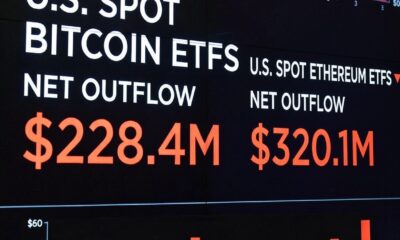
U.S. Spot Bitcoin and Ethereum ETFs See Significant Weekly Outflows
-
DeFi1 month ago
Bitcoin Holds Above $84,000, Shrugging Off Heavy ETF Outflows as Oil Declines
-

 DeFi2 weeks ago
LUNC Hits 462B Burned After v4.1.1 Upgrade
-
 DeFi1 month ago
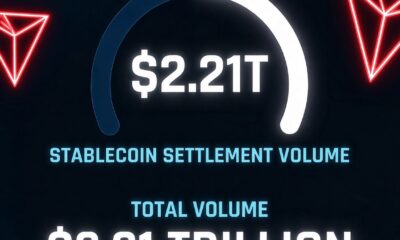
TRON Q3 2026 Report: $2.21 Trillion in Stablecoin Settlement Volume
-

 DeFi4 weeks ago
Arbitrum Rallies on Stablecoin Growth Program as DeFi Tokens Outperform
-
 DeFi4 weeks ago
Bitcoin and Ethereum Spot ETFs Record Substantial Weekly Outflows
-

 DeFi3 weeks ago
BNB Standard Corporation
-

 DeFi4 weeks ago
Nine Crypto Firms Launch Quantum Alliance to Set Post-Quantum Standards
-

 DeFi1 month ago
South Korea Blocks Domestic Access to 27 Unregistered Crypto Exchange Websites, Including KuCoin and MEXC
-
 DeFi3 weeks ago
Swiss FINMA Approves First Retail Bitcoin ETF Holding BTC Directly
-

 DeFi4 weeks ago
Inflation Shock Triggers Nearly $1 Billion in Liquidations as Bitcoin Tests $80,000
-

 DeFi3 weeks ago
U.S. Spot Bitcoin ETFs Post Best Inflow Day in Nearly a Month
-

 DeFi1 month ago
Ethereum Foundation-Linked Wallets Transfer 4,393 ETH (~$11 Million) to Kraken
-

 DeFi4 weeks ago
World Liberty Financial’s USD1 Stablecoin Sheds Over $400 Million in Market Cap Amid Redemptions
-

 DeFi3 weeks ago
Binance-Linked Transfer Triggers 347 Million LUNC Burn
-

 Crypto2 weeks ago
DTCC Launches Tokenization Service Covering Approximately $30 Trillion in Securities
-

 DeFi4 weeks ago
Strive Discloses Additional Bitcoin Purchases, Holdings Reach 36,818 BTC
-

 DeFi1 month ago
Binance Rolls Out AI Trading Interface Globally After 150,000-User Beta
-
 DeFi4 weeks ago
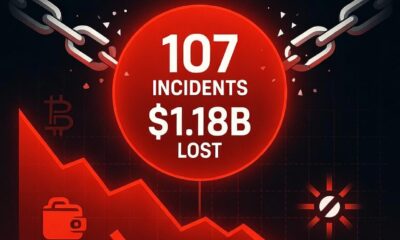
Crypto Hacks and Losses Reach $1.18 Billion in Q3 2026 Across 107 Incidents
-

 Crypto2 weeks ago
Memecoin PEPE Rallies on Reported Large Holdings Linked to Justin Sun; Broader Tokenization Debate Continues
-

 DeFi3 weeks ago
Crypto Liquidations Surge Past $400 Million in Hours as Bitcoin Briefly Dips Below $80,000
-

 DeFi3 weeks ago
Ripple Secures Final OCC Approval for National Trust Bank to Oversee RLUSD
-

 DeFi3 weeks ago
Bitcoin Slides Below $81,500 as Tech Sell-Off and Elevated Oil Prices Hit Risk Assets
-

 Bitcoin2 weeks ago
Federal Reserve Holds Rates Steady as Bitcoin Trades Near $80,000; December Hike Odds Rise
-

 DeFi4 weeks ago
Bitcoin Drops Below $81,000 as Hotter U.S. CPI Revives Rate-Hike Fears and Asian Equities Tumble
-

 DeFi3 weeks ago
Strive Adds $335 Million in Bitcoin to Corporate Treasury
-

 DeFi3 weeks ago
Mt. Gox Extends Creditor Repayment Deadline to October 2027
-

 DeFi4 weeks ago
Strategy Adds 267 Bitcoin for $22.1 Million, Bringing Holdings to 848,517 BTC
-

 DeFi4 weeks ago
Circle Targets 40 Emerging Markets
-

 DeFi4 weeks ago
JPMorgan Expands JPM Coin Deposit Token to Ethereum Mainnet for Institutional Clients
-

 DeFi2 weeks ago
Stablecoin Issuers and Partners Freeze Billions Linked to Binance Incident
-

 DeFi3 weeks ago
BlackRock Files for “Buffer” Bitcoin ETF (Ticker: PBIT)
-

 DeFi3 weeks ago
Mastercard Advances AI Agent Payments
-

 Crypto2 weeks ago
Hyperliquid Permanently Burns Nearly 5% of Maximum HYPE Supply Amid Broader Token Burn Trends