Crypto
Trump Nominates Four to SEC and CFTC, Naming Steven Levine to Replace Peirce


Key takeaways
- President Donald Trump nominated four people to fill vacant seats at the SEC and CFTC, the first such nominations in roughly a year.
- Steven Levine would replace Hester Peirce at the SEC, while former CFTC Commissioner Kristin Johnson was named for a second SEC seat.
- All four need Senate confirmation, and Democrats are set to take control of the Senate in January.
U.S. President Donald Trump has nominated four people to fill vacant commissioner seats at the Securities and Exchange Commission and the Commodity Futures Trading Commission, the first such picks in about a year, CoinDesk reported. The slate includes Steven Levine, named to replace former SEC Commissioner Hester Peirce.
The nominations are bipartisan. Levine and Nathan Anonick are Republicans, while Kristin Johnson and Matthew Rowland are Democrats, according to The Block. Johnson and Levine were nominated to the SEC, and Anonick and Rowland to the CFTC. Each nominee needs Senate confirmation.
CoinDesk called the slate unusual. Trump had so far sought to remove Democrats from commissions and had not nominated any Democrats to the SEC or CFTC until now. Both agencies can have up to five commissioners and have typically been staffed on a bipartisan basis.
Both agencies are running well below full strength. The SEC has only two of its five commissioner seats filled, held by Chairman Paul Atkins and Commissioner Mark Uyeda. At the CFTC, Chairman Mike Selig is the sole member of the five-seat commission, Cointelegraph reported. Peirce left the SEC in October.
Who the Nominees Are
Levine most recently served as general counsel and a senior adviser at the White House Council of Economic Advisers. He previously worked at the SEC as counsel and deputy chief of staff to Uyeda. His proposed term ends June 5, 2030. Cointelegraph noted that his views on crypto regulation are less publicly established than Peirce’s.
Peirce led the SEC’s Crypto Task Force and supported Chairman Atkins’ Project Crypto effort to modernize securities rules for digital assets. Johnson, a former CFTC commissioner, was nominated for the SEC seat held by Caroline Crenshaw, whose term has expired. Her proposed term ends June 5, 2029. At the CFTC, she pushed for stronger customer protections and conflict-of-interest rules for crypto firms.
Both CFTC nominees worked on the Digital Asset Market Clarity Act, the market-structure bill that stalled in the Senate in September. Anonick is legislative counsel to Senate Agriculture Committee Chairman John Boozman. Rowland, a CFTC attorney detailed to the committee, also worked on its 2024 crypto bill.
Selig, whom Trump nominated to lead the CFTC in 2025, called Anonick and Rowland “two strong bipartisan picks.” Ji Kim, chief executive of the Crypto Council for Innovation, wrote on X that the nominees “bring a wealth of experience and expertise that will help ensure continued American leadership.”
The Senate Banking Committee will consider the SEC nominees and the Senate Agriculture Committee the CFTC picks before full Senate votes. Time is short: the Senate is in its lame-duck session after last week’s election, and Democrats are set to take control in January, with Elizabeth Warren expected to chair the Banking Committee.

The content on CoinReporter.io is for informational purposes only and is not financial or investment advice. Cryptocurrency investments are highly volatile and risky. Always conduct your own research and consult a qualified financial advisor before making any investment decisions. CoinReporter.io and its authors are not liable for any losses resulting from actions based on this website’s content.

























Key takeaways
- Payward’s third-quarter adjusted EBITDA fell 66% from a year earlier to $60 million, though it rose from $23 million in the second quarter.
- Total platform margin, its new main revenue measure, fell 12% year over year to $487 million on $353 billion in transactions.
- The company plans U.S. prediction markets, stock perpetual futures and a personal finance AI agent.
Kraken parent Payward reported $60 million in third-quarter adjusted EBITDA on Friday, down 66% from $178.6 million a year earlier but up from $23 million in the second quarter, according to The Block. Slower crypto trading weighed on fees.
The private company has replaced adjusted revenue with a measure it calls total platform margin, which also deducts staking rewards paid to customers. That figure fell 12% from a year earlier to $487 million, but rose 12% from $436 million in the second quarter.
Customers transacted $353 billion across Payward’s platforms in the quarter, down 30% year over year and up 22% from the prior quarter. Funded accounts reached 7.1 million at the end of September, up 37% from a year earlier, while billable accounts rose 74% to 1.5 million.
Payward nearly doubled its share of global crypto spot trading to 6.5% in September from 3.3% a year earlier, Cointelegraph reported. The number of derivatives contracts it charges a per-contract fee on rose 84% to 66 million, and margin from subscriptions and trader evaluations rose 59% to $125 million.
Less Reliance on Trading Fees
Income tied to client assets and access to products, data and services rose to 52% of the total, up from 46% a year earlier, CoinDesk reported. Margin from assets customers hold on its platforms, including staking services, rose 26% to $128 million, Cointelegraph said.
Payward said prediction markets for U.S. clients are among its next products, though it gave no launch date. It also plans stock perpetual futures through its own CFTC-regulated exchange, a test U.S. credit card, and a personal finance AI agent that would need customer approval before each trade, The Block said.
Its tokenized stock platform, xStocks, passed $1 billion in assets in October, and the company plans funds built around it. Payward has also expanded through acquisitions, including futures broker NinjaTrader, derivatives platform Bitnomial and stablecoin payments firm Reap, according to Cointelegraph.
Payward has also held talks with Wells Fargo about supplying liquidity for crypto trading, and separately discussed a financial-infrastructure partnership with BNY, CoinDesk previously reported, citing people familiar with the discussions. In November, a Payward-affiliated fund and its clients bought an undisclosed amount of AAVE tokens.
Other exchanges are under similar pressure. Coinbase’s third-quarter revenue fell 35% year over year, CoinDesk noted, while Gemini reported a 19% revenue drop and a 73% fall in trading volume this week.
The results could matter for a future listing. Payward confidentially filed for a U.S. IPO in November 2025 but paused the plan in March. By September, the earliest listing window it was considering was the second quarter of 2027, Cointelegraph reported.


Bitcoin Tests $75,200 Support
Total crypto market capitalization hovered near $2.50–2.54 trillion on November 9, 2026. Bitcoin dominance remained elevated at roughly 59–60%. The...


Bitcoin Slips Toward $74,600
Bitcoin traded in a tight range near $75,000–$76,000 for much of November 8 before settling lower, closing the CoinMarketCap snapshot...


Bitcoin Crashes Toward $75K
Bitcoin closed November 6 near $75,900 after an intense sell-off that pushed it as low as roughly $74,800 intraday—its weakest...


Crypto Market Stabilizes After Sharp Dip
Bitcoin recovered from multi-week lows near $75,200 and stabilized above $76,000 on November 6, 2026, as the market absorbed a...


Elizabeth Warren Expected to Chair Senate Banking Committee After Democratic Midterm Sweep
Longtime crypto critic Senator Elizabeth Warren is positioned to lead the powerful Senate Banking Committee when the new Congress convenes...


Bitcoin Dips to Multi-Week Lows Near $75,200 Before Recovering Above $76,000
Bitcoin briefly tumbled below $76,000 on November 6, 2026, reaching multi-week lows near $75,200 before buyers stepped in and the...


Bitcoin Rebounds Past $80,000 as Midterms Conclude and Markets Digest Binance Hack Details
Bitcoin staged a sharp V-shaped recovery on November 4, reclaiming $80,000 after briefly touching a seven-week low near $75,600–$75,700. The...


Bitcoin Volatility and ETF Outflows Amid Elections and Hack Fallout
Bitcoin experienced sharp swings in early November, dipping below $76,000 to multi-week lows near $75,700 as residual fallout from the...


Binance SAFU Fund Falls Below $800 Million Threshold After Record Hack Coverage
Binance has drawn down roughly half of its Secure Asset Fund for Users (SAFU), leaving the Bitcoin reserve near 7,500...


Bitcoin Falls Below $77,000 as Chip Stocks Sell Off Ahead of U.S. Midterms
Bitcoin traded under $77,000 on November 3, 2026, down roughly 2% over 24 hours, as a deepening sell-off in semiconductor...
-

 DeFi2 weeks ago
LUNC Hits 462B Burned After v4.1.1 Upgrade
-

 DeFi1 month ago
U.S. Spot Bitcoin and Ethereum ETFs See Significant Weekly Outflows
-
 DeFi1 month ago
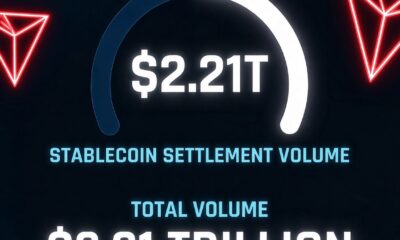
TRON Q3 2026 Report: $2.21 Trillion in Stablecoin Settlement Volume
-

 DeFi4 weeks ago
Arbitrum Rallies on Stablecoin Growth Program as DeFi Tokens Outperform
-
 DeFi4 weeks ago
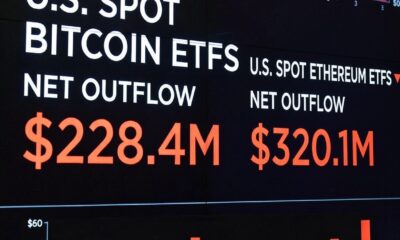
Bitcoin and Ethereum Spot ETFs Record Substantial Weekly Outflows
-

 DeFi3 weeks ago
BNB Standard Corporation
-

 DeFi4 weeks ago
Nine Crypto Firms Launch Quantum Alliance to Set Post-Quantum Standards
-

 DeFi4 weeks ago
Swiss FINMA Approves First Retail Bitcoin ETF Holding BTC Directly
-

 DeFi1 month ago
Inflation Shock Triggers Nearly $1 Billion in Liquidations as Bitcoin Tests $80,000
-

 DeFi3 weeks ago
Binance-Linked Transfer Triggers 347 Million LUNC Burn
-

 DeFi1 month ago
Ethereum Foundation-Linked Wallets Transfer 4,393 ETH (~$11 Million) to Kraken
-

 DeFi4 weeks ago
U.S. Spot Bitcoin ETFs Post Best Inflow Day in Nearly a Month
-

 Crypto2 weeks ago
DTCC Launches Tokenization Service Covering Approximately $30 Trillion in Securities
-

 DeFi4 weeks ago
World Liberty Financial’s USD1 Stablecoin Sheds Over $400 Million in Market Cap Amid Redemptions
-

 DeFi4 weeks ago
Strive Discloses Additional Bitcoin Purchases, Holdings Reach 36,818 BTC
-

 DeFi1 month ago
Binance Rolls Out AI Trading Interface Globally After 150,000-User Beta
-

 DeFi4 weeks ago
Crypto Hacks and Losses Reach $1.18 Billion in Q3 2026 Across 107 Incidents
-

 Crypto2 weeks ago
Memecoin PEPE Rallies on Reported Large Holdings Linked to Justin Sun; Broader Tokenization Debate Continues
-

 DeFi3 weeks ago
Crypto Liquidations Surge Past $400 Million in Hours as Bitcoin Briefly Dips Below $80,000
-

 DeFi3 weeks ago
Ripple Secures Final OCC Approval for National Trust Bank to Oversee RLUSD
-

 Bitcoin2 weeks ago
Federal Reserve Holds Rates Steady as Bitcoin Trades Near $80,000; December Hike Odds Rise
-

 DeFi3 weeks ago
Bitcoin Slides Below $81,500 as Tech Sell-Off and Elevated Oil Prices Hit Risk Assets
-

 DeFi1 month ago
Bitcoin Drops Below $81,000 as Hotter U.S. CPI Revives Rate-Hike Fears and Asian Equities Tumble
-

 DeFi3 weeks ago
Strive Adds $335 Million in Bitcoin to Corporate Treasury
-

 DeFi4 weeks ago
Mt. Gox Extends Creditor Repayment Deadline to October 2027
-

 DeFi4 weeks ago
Strategy Adds 267 Bitcoin for $22.1 Million, Bringing Holdings to 848,517 BTC
-

 DeFi4 weeks ago
JPMorgan Expands JPM Coin Deposit Token to Ethereum Mainnet for Institutional Clients
-

 DeFi4 weeks ago
Circle Targets 40 Emerging Markets
-

 DeFi2 weeks ago
Stablecoin Issuers and Partners Freeze Billions Linked to Binance Incident
-
DeFi5 days ago
Bitcoin Tests $75,200 Support
-
DeFi1 week ago
Bitcoin Rebounds Past $80,000 as Midterms Conclude and Markets Digest Binance Hack Details
-

 Crypto2 weeks ago
Hyperliquid Permanently Burns Nearly 5% of Maximum HYPE Supply Amid Broader Token Burn Trends
-

 DeFi3 weeks ago
BlackRock Files for “Buffer” Bitcoin ETF (Ticker: PBIT)
-

 DeFi2 weeks ago
Moody’s Assigns Investment-Grade A2 Rating to Ripple’s RLUSD; Coinbase Lists the Stablecoin
-

 DeFi3 weeks ago
Mastercard Advances AI Agent Payments
-
DeFi1 week ago
Bitcoin Dips to Multi-Week Lows Near $75,200 Before Recovering Above $76,000