Crypto
Kazakhstan Plans Tokenized Government Bonds for Q1 2027 After 10 Billion Tenge Pilot


- National Bank of Kazakhstan Governor Timur Suleimenov said tokenized government bonds will probably be issued in the first quarter of 2027, jointly with the Finance Ministry.
- The plan follows the central bank’s first tokenized notes on Nov. 9: 10 billion tenge of 91-day paper sold on KASE at a 15.72% weighted average yield.
- Officials also plan to expand digital tenge issuance to 2 trillion tenge and later tokenize assets such as real estate and precious metals.
Kazakhstan plans to issue tokenized government bonds in the first quarter of 2027, National Bank Governor Timur Suleimenov said at the 14th Congress of Financiers in Almaty on Nov. 13, according to The Astana Times. The central bank will work with the Finance Ministry on the issue.
“We plan to issue tokenized government bonds jointly with the Ministry of Finance in the near future. This will probably take place in the first quarter of next year,” Suleimenov said. The bonds would be Finance Ministry debt rather than central bank obligations.
The plan builds on the National Bank’s first tokenized note sale on Nov. 9. It placed 50 billion tenge of 91-day notes, including 10 billion tenge (about $22 million) in tokenized form, through the Kazakhstan Stock Exchange (KASE), CoinDesk reported. The weighted average yield was 15.72%, and demand reached 1.4 times the offer.
“The successful conduct of these trades means that we have tested the full readiness of the infrastructure, all institutional arrangements and so on, to expand this mechanism,” Suleimenov said. KASE hosted the first issuance of digital financial assets by private issuers on Oct. 27.
KASE has said its digital asset platform runs on the Solana blockchain, with BitGo providing custody infrastructure, though neither has been confirmed as a participant in the bond sale, CoinDesk said.
A Wider Crypto Push
Kazakhstan’s digital asset framework came fully into force on May 1, 2026, and the country began licensing crypto exchanges in July, Qazinform reported. Eight licensed platforms now operate, with combined trading volume of 45 billion tenge. A national crypto custody service and a National Crypto Reserve have also been set up.
The National Bank and the government also plan to expand issuance of the digital tenge to 2 trillion tenge, mainly to support People’s Construction, a nationwide infrastructure programme. Suleimenov said tokenization could later extend to real estate, precious metals and mineral resources.
In October, the National Bank tapped Tether to explore stablecoins and asset tokenization, CoinDesk noted. Central banks elsewhere are running similar tests, including the Bank of England, MAS and Bank of Thailand’s tokenized FX settlement trial.
The next milestone is the first Finance Ministry bond sale on KASE’s digital asset platform, which Suleimenov said is “most likely” to happen in the first quarter of 2027.

The content on CoinReporter.io is for informational purposes only and is not financial or investment advice. Cryptocurrency investments are highly volatile and risky. Always conduct your own research and consult a qualified financial advisor before making any investment decisions. CoinReporter.io and its authors are not liable for any losses resulting from actions based on this website’s content.
























Key takeaways
- Visa said on Wednesday it will let eligible Asia-Pacific clients prefund Visa Direct cross-border payouts with stablecoins, while recipients still receive local-currency fiat.
- Singapore-based payments firm dtcpay is the pilot partner, with Triple-A handling stablecoin conversion, compliance screening and settlement.
- The move follows Visa Direct’s first commercial U.S. rollout with Inyo Global in October and earlier 2025 pilots that tested USDC and EURC.
Visa said on Wednesday, in an announcement dated Nov. 18, that it will let eligible Asia-Pacific clients use stablecoins to prefund cross-border payouts through its Visa Direct network, while recipients still get paid in local currency.
The company set out the plan in an announcement dated Nov. 18. Under the model, a business funds the payout with a supported stablecoin and Visa Direct then sends fiat to the recipient through its real-time money movement network, which Visa says connects more than 18 billion endpoints.
Visa is piloting the service with dtcpay, a Singapore-based digital payments company. A licensed partner, not Visa itself, provides the regulated digital-asset services. Visa said availability will vary by eligibility and geography and that clients should refer to their Visa representative.
Stablecoin infrastructure firm Triple-A said in a separate statement on Wednesday that it will convert the stablecoins and handle compliance screening and settlement for eligible Visa Direct clients in Asia-Pacific, allowing payment firms to fund payouts outside normal banking hours.
“Stablecoins are becoming an increasingly important part of the infrastructure supporting global money movement. Their long-term value lies in how effectively they connect with the financial systems businesses already use,” Vira Platonova, global head of Visa Direct, said in the announcement.
Commenting on the regional rollout, Rhidoi Krishnakumar, head of Visa Direct for Asia-Pacific, said in the same announcement that stablecoin-enabled funding can help businesses move liquidity across borders and manage working capital, “while maintaining a familiar fiat payout experience for recipients.”
From a U.S. Launch to an Asia-Pacific Pilot
Visa first tested stablecoin prefunding and payouts through Visa Direct in 2025, according to the company. In October 2026 the capability moved into commercial production in the United States with Inyo Global, and Visa is now extending that work into Asia-Pacific.
The first two tokens Visa tested for prefunding were Circle’s USDC and EURC, a company spokesperson told The Block in September 2025. The new Asia-Pacific pilot does not, in Visa’s own release, name which tokens dtcpay will use at the start.
Eric Barbier, founder and chief executive of Triple-A, said Asia-Pacific already accounts for nearly a third of global cross-border payment flows and that share is expected to grow. Funding those payouts, he said, still means dealing with several currencies, banking systems and time zones.
The Asia-Pacific expansion fits Visa’s wider stablecoin push across settlement and payouts. The company has said its annualized stablecoin settlement run rate had reached $20 billion, and it recently agreed to support Western Union’s USDPT stablecoin on VisaNet.
It also lands in a region where banks are already testing tokenized dollars. This week, DBS and Circle launched 24/7 USDC minting and redemption for eligible institutions in Asia, a different product from Visa’s payout prefunding but part of the same shift toward always-on settlement.
The pilot does not mean every Asia-Pacific firm can fund payouts in stablecoins tomorrow. Visa still has to roll the service out client by client, and recipients will see ordinary fiat. For now, it is a practical test of whether dollar tokens can sit behind existing payment rails rather than replace them.


Bitcoin ETFs Extend Outflow Streak to Eight Days as Traders Brace for Nvidia Earnings
U.S. spot bitcoin exchange-traded funds recorded net outflows of $68.6 million on Monday, according to data from Farside Investors, extending...


Aster CEO Blames Likely Malicious Liquidations as ASTER Token Plunges 32% in Minutes
Key takeaways Aster chief executive Leonard Leung said the team is investigating after the ASTER token jumped above $0.71 and...


Coinone Warns of Phishing After Breach at Support Contractor Exposes 11 Data Types
Key takeaways South Korean crypto exchange Coinone has warned customers about phishing and identity theft after an attacker breached MetaM,...


Bitcoin Tests $75,200 Support
Total crypto market capitalization hovered near $2.50–2.54 trillion on November 9, 2026. Bitcoin dominance remained elevated at roughly 59–60%. The...


Bitcoin Slips Toward $74,600
Bitcoin traded in a tight range near $75,000–$76,000 for much of November 8 before settling lower, closing the CoinMarketCap snapshot...


Bitcoin Crashes Toward $75K
Bitcoin closed November 6 near $75,900 after an intense sell-off that pushed it as low as roughly $74,800 intraday—its weakest...


Crypto Market Stabilizes After Sharp Dip
Bitcoin recovered from multi-week lows near $75,200 and stabilized above $76,000 on November 6, 2026, as the market absorbed a...


Elizabeth Warren Expected to Chair Senate Banking Committee After Democratic Midterm Sweep
Longtime crypto critic Senator Elizabeth Warren is positioned to lead the powerful Senate Banking Committee when the new Congress convenes...


Bitcoin Dips to Multi-Week Lows Near $75,200 Before Recovering Above $76,000
Bitcoin briefly tumbled below $76,000 on November 6, 2026, reaching multi-week lows near $75,200 before buyers stepped in and the...


Bitcoin Rebounds Past $80,000 as Midterms Conclude and Markets Digest Binance Hack Details
Bitcoin staged a sharp V-shaped recovery on November 4, reclaiming $80,000 after briefly touching a seven-week low near $75,600–$75,700. The...
-

 DeFi3 weeks ago
LUNC Hits 462B Burned After v4.1.1 Upgrade
-

 DeFi4 weeks ago
Arbitrum Rallies on Stablecoin Growth Program as DeFi Tokens Outperform
-
 DeFi1 month ago
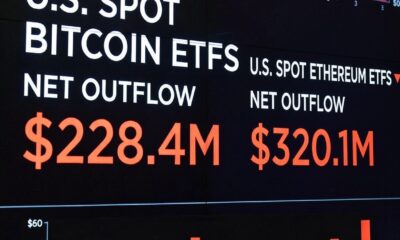
Bitcoin and Ethereum Spot ETFs Record Substantial Weekly Outflows
-

 DeFi4 weeks ago
BNB Standard Corporation
-

 DeFi1 month ago
Nine Crypto Firms Launch Quantum Alliance to Set Post-Quantum Standards
-
 Crypto3 weeks ago
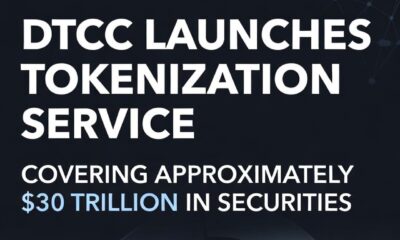
DTCC Launches Tokenization Service Covering Approximately $30 Trillion in Securities
-

 DeFi4 weeks ago
Binance-Linked Transfer Triggers 347 Million LUNC Burn
-
 DeFi4 weeks ago
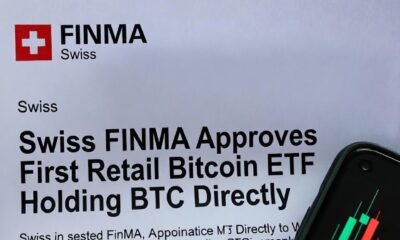
Swiss FINMA Approves First Retail Bitcoin ETF Holding BTC Directly
-

 DeFi4 weeks ago
U.S. Spot Bitcoin ETFs Post Best Inflow Day in Nearly a Month
-

 DeFi4 weeks ago
World Liberty Financial’s USD1 Stablecoin Sheds Over $400 Million in Market Cap Amid Redemptions
-

 DeFi4 weeks ago
Strive Discloses Additional Bitcoin Purchases, Holdings Reach 36,818 BTC
-

 Crypto3 weeks ago
Memecoin PEPE Rallies on Reported Large Holdings Linked to Justin Sun; Broader Tokenization Debate Continues
-

 DeFi4 weeks ago
Crypto Hacks and Losses Reach $1.18 Billion in Q3 2026 Across 107 Incidents
-

 DeFi3 weeks ago
Ripple Secures Final OCC Approval for National Trust Bank to Oversee RLUSD
-

 DeFi3 weeks ago
Crypto Liquidations Surge Past $400 Million in Hours as Bitcoin Briefly Dips Below $80,000
-

 Bitcoin3 weeks ago
Federal Reserve Holds Rates Steady as Bitcoin Trades Near $80,000; December Hike Odds Rise
-

 DeFi4 weeks ago
Bitcoin Slides Below $81,500 as Tech Sell-Off and Elevated Oil Prices Hit Risk Assets
-

 Crypto2 days ago
Ether ETFs Lose $399 Million for Seventh Straight Week, Nearing Record Outflow Streak
-
DeFi1 week ago
Bitcoin Tests $75,200 Support
-

 DeFi4 weeks ago
Mt. Gox Extends Creditor Repayment Deadline to October 2027
-

 DeFi4 weeks ago
JPMorgan Expands JPM Coin Deposit Token to Ethereum Mainnet for Institutional Clients
-

 DeFi4 weeks ago
Strive Adds $335 Million in Bitcoin to Corporate Treasury
-

 DeFi1 month ago
Circle Targets 40 Emerging Markets
-

 Crypto3 weeks ago
Hyperliquid Permanently Burns Nearly 5% of Maximum HYPE Supply Amid Broader Token Burn Trends
-

 DeFi3 weeks ago
Stablecoin Issuers and Partners Freeze Billions Linked to Binance Incident
-
DeFi2 weeks ago
Bitcoin Rebounds Past $80,000 as Midterms Conclude and Markets Digest Binance Hack Details
-

 DeFi4 weeks ago
Strategy Adds 267 Bitcoin for $22.1 Million, Bringing Holdings to 848,517 BTC
-

 DeFi4 weeks ago
BlackRock Files for “Buffer” Bitcoin ETF (Ticker: PBIT)
-
DeFi2 weeks ago
Bitcoin Crashes Toward $75K
-

 DeFi4 weeks ago
Mastercard Advances AI Agent Payments
-

 DeFi3 weeks ago
Moody’s Assigns Investment-Grade A2 Rating to Ripple’s RLUSD; Coinbase Lists the Stablecoin
-
Bitcoin1 day ago
Bitcoin ETFs Extend Outflow Streak to Eight Days as Traders Brace for Nvidia Earnings
-

 DeFi2 weeks ago
Bitcoin Falls Below $77,000 as Chip Stocks Sell Off Ahead of U.S. Midterms
-
DeFi2 weeks ago
Bitcoin Dips to Multi-Week Lows Near $75,200 Before Recovering Above $76,000
-

 Crypto5 days ago
DTCC Adds Solana to Tokenization Service, Targeting Second Half of 2027
-

 DeFi4 weeks ago
JPMorgan