DeFi
Ethereum Advances Plans for Gas Payments Without Holding ETH


The most common Ethereum failure is not a hack. It is a wallet full of USDC that cannot move because there is no ETH left for gas.
Core developers have now put a protocol fix on the calendar. On the August 27 All Core Developers Execution call (ACDE #244), EIP-8141 — Frame Transactions — moved from “Considered for Inclusion” to Scheduled for Inclusion in Hegotá, the upgrade aimed at 2027. That is not mainnet. It is a locked engineering slot. The Ethereum Foundation Protocol Cluster later ranked Frames an S-tier must-ship for Hegotá, alongside consensus-layer FOCIL (EIP-7805). Vitalik Buterin, one of ten listed authors, said in early September that quiet work on the spec had moved faster than the public thread suggested.
What Frames actually change
Today a transaction is one blob: one sender, one signature scheme, one gas payer, and that payer must be ETH. Frame Transactions split that blob into a sequence of ordinary contract calls — up to 64 frames inside one atomic type-0x06 envelope. One frame can validate. One can approve who pays gas. The rest execute. The account that starts the action and the account that settles the fee no longer have to be the same.
That is the UX punchline. A payments app can sponsor the first swap for a user who holds only a stablecoin. A paymaster can take USDC in one frame, sell it for ETH in the next, and hand validators the ETH the protocol still demands. The user never needed an ETH balance. The chain still gets paid in ETH. That distinction matters. This is not “USDC gas at the consensus layer.” It is “ETH gas, with the conversion and sponsorship expressed on-chain in the same transaction.”
Draft constants put intrinsic cost at 12,000 gas plus 475 per extra frame. Early January text was looser (15,000 intrinsic, a 1,000-frame cap). The numbers have already tightened. They will move again. Treat them as direction, not a fee schedule.
Why this is not just another 4337 wrapper
Ethereum has been talking about account abstraction since EIP-86 in 2016. ERC-4337 and EIP-7702 (Pectra, May 2025) got wallets part of the way: smart accounts, temporary delegation, off-chain bundlers. Those systems work. They also fragment. Different mempools, different paymasters, different rules if the bundler goes dark.
Frames are meant to pull that logic into the public mempool and the EVM. Existing externally owned accounts are in scope — users are not forced onto a new contract wallet to get sponsored gas. Validation can be a contract call instead of a hardcoded secp256k1 check. That is also the quantum door: rotate an account to a post-quantum scheme without moving funds to a new address, and without a dedicated hard fork per algorithm. Hegotá’s other job, in the Foundation’s framing, is to make that key-rotation path real enough to aim at a quantum-resistant L1 later in the decade.
Buterin’s longer write-up in February described a RAI-for-gas path as validation, paymaster check, token transfer, execution, refund — no off-chain relayer required if the chain itself is up. Intermediary minimization is the political line. Whether wallets and apps actually ship that flow, or keep using the same relayers with a prettier envelope, is an adoption question Hegotá cannot answer from a spec.
What is not decided
Scheduled for Inclusion is not frozen code. On the August call, developers SFI’d Frames in the last minutes with an explicit caveat: the EIP number, the implementation, and almost everything in the draft can still change. A competing design, EIP-8130, is still in the conversation. Glamsterdam — the upgrade before Hegotá, targeted for later 2026 — has to land cleanly first. Sepolia and Hoodi dates for Frames are blank. Public-mempool admission will likely start conservative because new validation paths are a denial-of-service surface. ERC-7562-style restrictions are already in the trade-off list.
So the honest sentence is narrower than the headlines. Ethereum has committed to trying to let the sender and the gas payer diverge at the protocol layer in 2027, while keeping ETH as the asset validators receive. If that ships, the “buy ETH before you can spend USDC” tax on new users gets a real off-ramp. If the spec mutates into another bundler-shaped thing, L2s and 4337 keep doing the UX work they already do.
For now the news is process, not product. Hegotá has a headliner on the execution layer. The empty-ETH wallet is the problem it is supposed to kill. The test is a mainnet transaction, years out, where the only balance in the sending account is a stablecoin — and it still goes through.

The content on CoinReporter.io is for informational purposes only and is not financial or investment advice. Cryptocurrency investments are highly volatile and risky. Always conduct your own research and consult a qualified financial advisor before making any investment decisions. CoinReporter.io and its authors are not liable for any losses resulting from actions based on this website’s content.




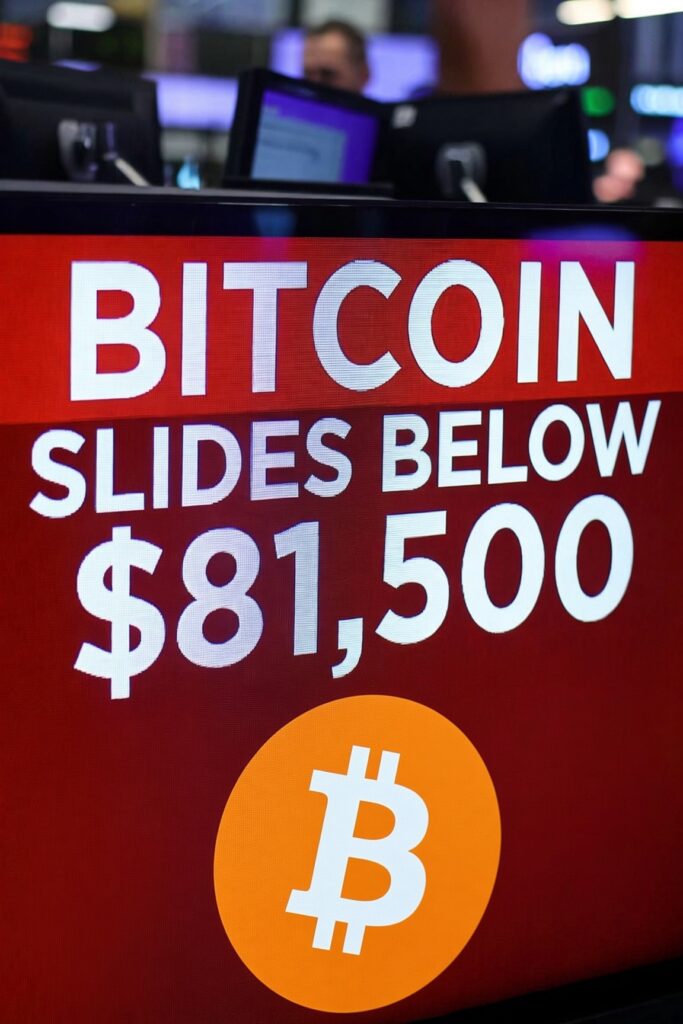
Bitcoin fell sharply on October 22, 2026, trading near $81,300–$81,600 with a market capitalization of roughly $1.63–$1.64 trillion after dropping more than 3% in 24 hours. Ethereum declined to the $2,370–$2,400 range (market cap near $291 billion), while the broader crypto market shed around 2–3%. The move followed a brief push toward the mid-$84,000s earlier in the week that failed to hold.
The decline tracked weakness in equities. The Nasdaq Composite closed down approximately 2.6% on Thursday—its steepest one-day drop since June—amid renewed concerns over AI capital spending and mixed results from Tesla and Meta. Meta shares fell nearly 7% after the company raised its spending outlook and announced plans involving non-voting shares to fund AI initiatives, while Tesla also declined. The sell-off extended into Asian markets. Brent crude held above $111–$113 amid geopolitical supply risks linked to Middle East tensions, including attacks that heightened fears of disruption and limited room for easier monetary policy.
Liquidations totaled hundreds of millions of dollars, predominantly long positions. Reports ranged from roughly $383 million to over $450 million across major venues in the 24-hour window, with Binance accounting for a large share and the biggest single liquidation exceeding $11 million on a Bitcoin long. Bitcoin briefly tested levels near or below $81,000 after the failed breakout attempt.
Outlook: Macro headwinds remain the dominant driver. Sustained oil strength and equity volatility continue to pressure crypto’s correlation with risk assets. Support near the low-$80,000s is being watched closely after the rejection from the mid-$84,000s. U.S. spot Bitcoin ETFs also saw notable outflows on October 22 (around $635 million in one dataset), reversing prior inflows and adding to short-term institutional demand softness. Further moves in tech stocks, oil, and upcoming U.S. data or Fed signals will likely set the near-term tone.

Bitcoin Slides Below $81,500 as Tech Sell-Off and Elevated Oil Prices Hit Risk Assets
Bitcoin fell sharply on October 22, 2026, trading near $81,300–$81,600 with a market capitalization of roughly $1.63–$1.64 trillion after dropping...


BNB Standard Corporation
BNB Standard (Nasdaq: BNC) to Ring Nasdaq Opening Bell on October 26 Under New CEO Alex Odagiu Binance co-founder Changpeng...


Mastercard Advances AI Agent Payments
Mastercard opened early access and demonstrated live transactions for its Agent Pay for Machines system. The platform allows AI agents...


JPMorgan
J.P. Morgan Asset Management included Bitcoin for the first time in its long-term capital market assumptions, projecting a 10% compound...


Strive Adds $335 Million in Bitcoin to Corporate Treasury
Nasdaq-listed Strive purchased 4,045 BTC between October 12 and 16, 2026, at an average price of roughly $82,803 per coin...


BlackRock Files for “Buffer” Bitcoin ETF (Ticker: PBIT)
BlackRock filed with the SEC on October 19, 2026, for the iShares Bitcoin Managed Protection ETF (proposed ticker PBIT). The...


Mt. Gox Extends Creditor Repayment Deadline to October 2027
The rehabilitation trustee for the collapsed Mt. Gox exchange pushed the creditor repayment deadline to October 31, 2027, with Tokyo...


U.S. Spot Bitcoin ETFs Post Best Inflow Day in Nearly a Month
U.S. spot Bitcoin ETFs recorded $526.7 million in net inflows on October 19, 2026, the largest single-day haul since September...

Swiss FINMA Approves First Retail Bitcoin ETF Holding BTC Directly
Switzerland’s Financial Market Supervisory Authority (FINMA) approved the country’s first retail exchange-traded fund that holds Bitcoin directly on October 20,...

Crypto Hacks and Losses Reach $1.18 Billion in Q3 2026 Across 107 Incidents
Security firm Hacken reported that crypto hacks and related losses totaled $1.18 billion across 107 incidents in the third quarter...
-

 DeFi1 month ago
Bitcoin Reclaims $81,000 and Closes Above Key 50-Week Moving Average
-

 DeFi3 weeks ago
Hong Kong Moves Licensed Stablecoins Onto Exchanges and Into Fund Settlement
-

 Crypto2 weeks ago
ESMA gives EU crypto firms three months to exit non-MiCA stablecoins
-

 Crypto3 weeks ago
Binance Burns 334.88 Million LUNC in October Fee Batch as Second Transaction Lifts the Day’s Total
-

 DeFi1 month ago
Coinbase Adds Fixed-Rate Bitcoin-Backed Loans via Morpho Midnight
-

 Bitcoin2 weeks ago
SEC clears listing path for first U.S. 3x Bitcoin and Ether ETFs
-

 Bitcoin2 weeks ago
Strategy (MicroStrategy) Adds 250 Bitcoin, Holdings Reach 848,250 BTC
-

 DeFi3 weeks ago
TOKEN2049 Opens in Singapore Next Week as the City Leads Regional Crypto Flow
-
 DeFi3 weeks ago
Robinhood Puts Hedge-Fund Tools in the App as Macro Turns Softer
-

 DeFi4 weeks ago
Solana Advances Alpenglow Upgrade to Public Testnet
-

 DeFi3 weeks ago
HSBC Names Its Hong Kong Stablecoin RedCoin, and Starts With PayMe
-

 DeFi2 weeks ago
Bitcoin Drops Below $82,000 Amid $770M+ in Liquidations as Volatility Spikes
-
 Bitcoin2 weeks ago
Bitcoin breaks under $84,000 as oil spikes on Hormuz tanker attacks
-

 Bitcoin3 weeks ago
Strategy Adds Another 1,665 BTC, Lifting Holdings to 847,666
-

 Bitcoin1 month ago
Record ETF Inflows and a Short Squeeze Drive Bitcoin’s $87,000 Break
-

 DeFi3 weeks ago
South Korea Ranks Second in On-Chain Crypto Holdings as the Tax Date Holds
-
 DeFi1 month ago
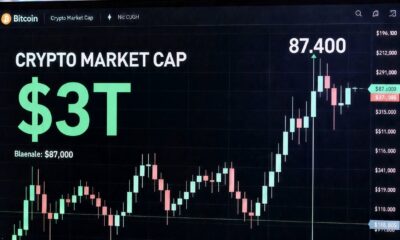
Bitcoin Surges Above $87,000 as Crypto Market Cap Reclaims $3 Trillion
-
 DeFi1 month ago
CFTC Submits Crypto Market Rules to White House Amid Congressional Stall
-

 Bitcoin1 month ago
X Partners With Coinbase, Kraken, Gemini and Brokers to Trade From the Timeline
-

 Crypto2 weeks ago
Treasury and FinCEN drop unhosted-wallet and mixer surveillance proposals
-
DeFi1 month ago
Bitcoin Surges Above $87,000 on ETF Inflows and Massive Short Squeeze
-

 Bitcoin3 weeks ago
Coinbase Receives CFTC Approval for U.S. Derivatives Clearinghouse
-

 DeFi3 weeks ago
BTSE Receives a Full Licence to Trade and Custody Crypto in Bhutan
-

 Crypto3 weeks ago
Singapore Reclaims the Regional Crypto Lead at $284 Billion as the Rest of CSAO Shrinks
-

 DeFi2 weeks ago
Bitcoin Holds Above $84,000, Shrugging Off Heavy ETF Outflows as Oil Declines
-

 DeFi2 weeks ago
Government-linked wallets move seized coins
-

 Bitcoin1 month ago
Strategy Resumes Bitcoin Buying, Adds 950 BTC
-

 DeFi2 weeks ago
Winklevoss files a 0.25% Zcash ETF
-

 Bitcoin2 weeks ago
Spot bitcoin ETFs flip to a ~$487 million outflow
-

 DeFi2 weeks ago
Uptober stalls ahead of the Fed minutes
-

 Bitcoin2 weeks ago
Bitcoin loses $84,000 as Hormuz attacks lift oil and yields
-
 Crypto2 weeks ago
CFTC opens Regulation CTX and CAM after Clarity Act stalls
-

 DeFi1 month ago
Avalanche Gains on NYSE Tokenization Testing Reports
-

 DeFi1 week ago
U.S. Spot Bitcoin and Ethereum ETFs See Significant Weekly Outflows
-

 Crypto2 weeks ago
Ether funds were already bleeding
-

 DeFi4 weeks ago
Quant Surges After Selection for U.S. Bank On-Chain Payments Initiative