Luna Classic
DFLunc Burns Billions of LUNC Tokens for Block Entropy Testnet Access

In a groundbreaking move, the decentralized finance protocol DFLunc has recently burned almost 2.5 billion of its native Terra Classic (LUNC) tokens. This strategic shift is part of the project’s collaboration with Edward Kim’s highly anticipated AI application chain, “Block Entropy”.
DFLunc has altered its LUNC burn mechanism to facilitate users in obtaining the Block Entropy testnet tokens. Rather than directly sending LUNC from user wallets to the burn address, the protocol now transfers tokens via a different address. As part of this process, the word “entropy” is entered into the memo field of transactions.
Over a span of two days, the protocol sent 58 million LUNC to the burn address on May 25, followed by 44 million LUNC on May 26. The project aims to burn billions of Terra Classic tokens as part of its strategy to deflate the circulating supply.
Users who wish to acquire Block Entropy TestNet tokens must send LUNC to the burn address accompanied by an “entropy” message. The transaction hash must then be entered into the TestNet faucet. The amount of testnet tokens received will correspond directly with the quantity of LUNC burned. It’s important to note that these tokens have no intrinsic value and can solely be used for machine learning activities.
Edward Kim, the core developer behind Block Entropy, plans to work closely with the Joint L1 Task Force (L1TF) to integrate Interchain Accounts (ICA) into Terra Classic following successful testing on LUNC L1 TestNet and passing a governance proposal. This step will be undertaken only after the CosmWasm v1.1.0 parity upgrade on June 14.
Post the parity upgrade, L1TF is contemplating a collaboration with the USTC repeg team to create a USTC test environment. This move is aimed at building the necessary infrastructure to successfully repeg USTC to $1. These developments mark a significant transition in the Terra Classic project’s approach and signal its commitment to emerging AI-driven blockchain innovations.

The content on CoinReporter.io is for informational purposes only and is not financial or investment advice. Cryptocurrency investments are highly volatile and risky. Always conduct your own research and consult a qualified financial advisor before making any investment decisions. CoinReporter.io and its authors are not liable for any losses resulting from actions based on this website’s content.




Crypto
Binance Burns 334.88 Million LUNC in October Fee Batch as Second Transaction Lifts the Day’s Total

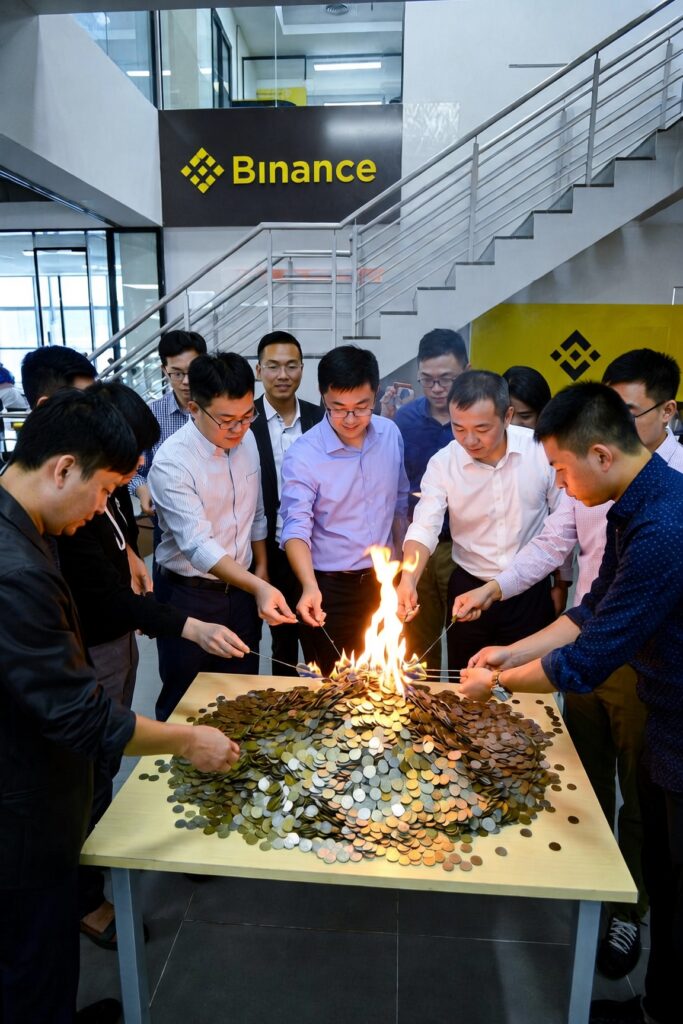
Binance removed 334,879,422 Terra Luna Classic (LUNC) from circulation on October 1, the headline transaction in its monthly exchange burn and the figure that led community trackers and crypto outlets. A second burn later the same day added 21,007,132 LUNC, taking the October 1 total to 355,886,554, according to on-chain records compiled by LUNC Metrics and reported by Lunc Daily.
The exchange has run the program since late 2022. It sends a share of fees earned on LUNC spot and margin pairs to a burn address. The current rule is 50 percent of the prior month’s fees. The October batch covers fees collected in September. Binance originally burned 100 percent of those fees, then cut the rate to 50 percent in late 2022 and has kept the monthly cadence ever since.
What hit the chain
LUNC Metrics lists two burn-wallet transfers from a Binance-linked address, terra18vnrzlzm2c4xfsx382pj2xnd:
- 334,879,422 LUNC at 11:02 UTC on October 1, block 30,643,773
- 21,007,132 LUNC at 12:30 UTC the same day, block 30,644,669
The first figure is the one most outlets used. CoinTurk and DailyCoin both reported 334,879,422.009852 LUNC destroyed and put Binance’s cumulative burns above 88 billion. LUNC Metrics priced that primary batch at about $17,605. The second transfer is smaller but real on-chain, and it is why some community accounts rounded the day to 355.89 million rather than 334.88 million.
Where the totals stand
Figures differ slightly by tracker because some count only the monthly fee batches and others add on-chain tax routed through Binance wallets.
- LUNC Community’s batch log puts Binance’s tracked fee burns at about 88.10 billion LUNC across 50 batches, with the October 1 batch listed at 334.9 million.
- LUNC Metrics, which also counts chain-fee burns, put Binance’s all-in total near 90.33 billion as of October 4, of which about 88.34 billion were direct burns to the burn wallet. That is roughly 19.6 percent of all LUNC destroyed.
- Network-wide burns sit around 460.1 billion to 460.2 billion LUNC. On-chain tax burns, Binance fee burns, and direct or community burns are the three main sources. Terra Form Labs remains the largest single historical burner. Binance is the largest exchange burner.
CoinTurk put circulating supply near 5.51 trillion after the burn. Against a supply still measured in the trillions, 335 million tokens is a rounding error in percentage terms, which is the point critics keep making.
Same size as September, far below the year’s peaks
The October primary batch matches the September 1 burn almost token for token. That earlier burn also came in at 334,879,422 LUNC and covered August fees. August 1 was smaller, at about 275.6 million. Earlier 2026 batches were much larger: about 5.30 billion on January 1, 2.19 billion on June 1, and 1.08 billion on February 1, according to the LUNC Community batch history. The last two months point to a flat, modest fee base rather than a revival in LUNC turnover on the exchange.
Price did not follow the burn
DailyCoin’s headline on the day was the awkward one: Binance set 334 million LUNC on fire, and the price barely moved. CoinTurk said 24-hour volume was under $10 million. That is the standing argument around these burns. Supporters treat the four-year streak as proof Binance never fully walked away from Terra Classic after the 2022 collapse. Skeptics note that a five-figure dollar burn cannot tighten a 5.5-trillion supply, and that the token still trades on the burn narrative more than on scarcity.
Binance has not issued a separate market comment beyond executing the transfers. The next scheduled batch, if the pattern holds, is November 1 and will reflect October fees.


BNB Standard Corporation
BNB Standard (Nasdaq: BNC) to Ring Nasdaq Opening Bell on October 26 Under New CEO Alex Odagiu Binance co-founder Changpeng...


Mastercard Advances AI Agent Payments
Mastercard opened early access and demonstrated live transactions for its Agent Pay for Machines system. The platform allows AI agents...


JPMorgan
J.P. Morgan Asset Management included Bitcoin for the first time in its long-term capital market assumptions, projecting a 10% compound...


Strive Adds $335 Million in Bitcoin to Corporate Treasury
Nasdaq-listed Strive purchased 4,045 BTC between October 12 and 16, 2026, at an average price of roughly $82,803 per coin...


BlackRock Files for “Buffer” Bitcoin ETF (Ticker: PBIT)
BlackRock filed with the SEC on October 19, 2026, for the iShares Bitcoin Managed Protection ETF (proposed ticker PBIT). The...


Mt. Gox Extends Creditor Repayment Deadline to October 2027
The rehabilitation trustee for the collapsed Mt. Gox exchange pushed the creditor repayment deadline to October 31, 2027, with Tokyo...


U.S. Spot Bitcoin ETFs Post Best Inflow Day in Nearly a Month
U.S. spot Bitcoin ETFs recorded $526.7 million in net inflows on October 19, 2026, the largest single-day haul since September...

Swiss FINMA Approves First Retail Bitcoin ETF Holding BTC Directly
Switzerland’s Financial Market Supervisory Authority (FINMA) approved the country’s first retail exchange-traded fund that holds Bitcoin directly on October 20,...

Crypto Hacks and Losses Reach $1.18 Billion in Q3 2026 Across 107 Incidents
Security firm Hacken reported that crypto hacks and related losses totaled $1.18 billion across 107 incidents in the third quarter...


Strive Discloses Additional Bitcoin Purchases, Holdings Reach 36,818 BTC
Strive reported acquiring approximately 1,223 BTC for roughly $100 million between October 14 and 16, 2026, at an average price...
-

 DeFi1 month ago
Bitcoin Reclaims $81,000 and Closes Above Key 50-Week Moving Average
-

 DeFi3 weeks ago
Hong Kong Moves Licensed Stablecoins Onto Exchanges and Into Fund Settlement
-

 Crypto2 weeks ago
ESMA gives EU crypto firms three months to exit non-MiCA stablecoins
-

 Crypto3 weeks ago
Binance Burns 334.88 Million LUNC in October Fee Batch as Second Transaction Lifts the Day’s Total
-

 DeFi4 weeks ago
Coinbase Adds Fixed-Rate Bitcoin-Backed Loans via Morpho Midnight
-

 Bitcoin2 weeks ago
SEC clears listing path for first U.S. 3x Bitcoin and Ether ETFs
-

 DeFi3 weeks ago
TOKEN2049 Opens in Singapore Next Week as the City Leads Regional Crypto Flow
-

 Bitcoin1 week ago
Strategy (MicroStrategy) Adds 250 Bitcoin, Holdings Reach 848,250 BTC
-
 DeFi3 weeks ago
Robinhood Puts Hedge-Fund Tools in the App as Macro Turns Softer
-

 DeFi4 weeks ago
Solana Advances Alpenglow Upgrade to Public Testnet
-

 DeFi3 weeks ago
HSBC Names Its Hong Kong Stablecoin RedCoin, and Starts With PayMe
-

 DeFi1 week ago
Bitcoin Drops Below $82,000 Amid $770M+ in Liquidations as Volatility Spikes
-
 Bitcoin2 weeks ago
Bitcoin breaks under $84,000 as oil spikes on Hormuz tanker attacks
-

 Bitcoin3 weeks ago
Strategy Adds Another 1,665 BTC, Lifting Holdings to 847,666
-

 Bitcoin4 weeks ago
Record ETF Inflows and a Short Squeeze Drive Bitcoin’s $87,000 Break
-

 DeFi3 weeks ago
South Korea Ranks Second in On-Chain Crypto Holdings as the Tax Date Holds
-
 DeFi4 weeks ago
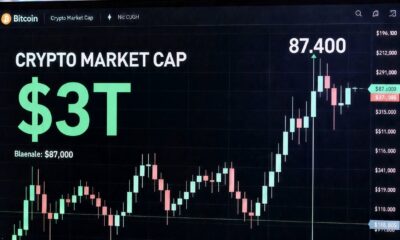
Bitcoin Surges Above $87,000 as Crypto Market Cap Reclaims $3 Trillion
-
 DeFi1 month ago
CFTC Submits Crypto Market Rules to White House Amid Congressional Stall
-

 Crypto2 weeks ago
Treasury and FinCEN drop unhosted-wallet and mixer surveillance proposals
-

 Bitcoin4 weeks ago
X Partners With Coinbase, Kraken, Gemini and Brokers to Trade From the Timeline
-
DeFi1 month ago
Bitcoin Surges Above $87,000 on ETF Inflows and Massive Short Squeeze
-

 Bitcoin3 weeks ago
Coinbase Receives CFTC Approval for U.S. Derivatives Clearinghouse
-

 DeFi3 weeks ago
BTSE Receives a Full Licence to Trade and Custody Crypto in Bhutan
-

 Crypto3 weeks ago
Singapore Reclaims the Regional Crypto Lead at $284 Billion as the Rest of CSAO Shrinks
-

 DeFi2 weeks ago
Bitcoin Holds Above $84,000, Shrugging Off Heavy ETF Outflows as Oil Declines
-

 DeFi2 weeks ago
Government-linked wallets move seized coins
-

 Bitcoin1 month ago
Strategy Resumes Bitcoin Buying, Adds 950 BTC
-

 DeFi2 weeks ago
Winklevoss files a 0.25% Zcash ETF
-
 Crypto2 weeks ago
CFTC opens Regulation CTX and CAM after Clarity Act stalls
-

 Bitcoin2 weeks ago
Spot bitcoin ETFs flip to a ~$487 million outflow
-

 DeFi1 month ago
Avalanche Gains on NYSE Tokenization Testing Reports
-

 Bitcoin2 weeks ago
Bitcoin loses $84,000 as Hormuz attacks lift oil and yields
-

 DeFi1 week ago
U.S. Spot Bitcoin and Ethereum ETFs See Significant Weekly Outflows
-

 DeFi4 weeks ago
Quant Surges After Selection for U.S. Bank On-Chain Payments Initiative
-
 DeFi4 weeks ago
Bitcoin Pulls Back Below $84,000 After Hitting Multi-Month Highs Near $87,000
-
 DeFi1 week ago
TRON Q3 2026 Report: $2.21 Trillion in Stablecoin Settlement Volume