DeFi
Charles Schwab is expanding Schwab Crypto beyond Bitcoin and Ethereum.


The firm said it will add Solana (SOL), Avalanche (AVAX), and Chainlink (LINK) to the platform in the coming months, giving retail clients direct spot access to three of the best-known tokens outside BTC and ETH.
The announcement, dated August 27, 2026, is the first expansion of the product since Schwab Crypto began rolling out in May 2026. Schwab framed the picks as “established cryptocurrencies that align with client demand” and said it intends to add more digital assets over time.
What is changing
Schwab Crypto currently offers buy-and-sell access to bitcoin and ethereum. SOL, AVAX, and LINK will join that lineup for clients who have a Schwab Crypto account. The firm did not give a specific listing date, only that the tokens will become available “in the coming months.” It also reserved the right to delay, change, or withdraw support for an announced asset if market, regulatory, operational, or risk conditions change.
Joe Vietri, Head of Digital Assets at Charles Schwab, said the expansion is meant to give clients more ways to build a digital-asset allocation inside the same investing and banking relationship they already use:
“With this expansion, clients will have more choices to build a digital asset allocation alongside the investing and banking experience they know and trust at Schwab. These additions are consistent with our approach to provide clients with access to familiar cryptocurrencies backed by an ecosystem of education, tools, resources, and support to make informed decisions about how crypto might fit into their broader investing goals.”
Scale of the platform
Schwab Crypto sits on one of the largest retail brokerage bases in the United States. As of July 31, 2026, Charles Schwab reported about 39.9 million active brokerage accounts and $13.04 trillion in total client assets. Even modest uptake among that base would put SOL, AVAX, and LINK in front of a far larger traditional-finance audience than most crypto-native venues reach on their own.
The product is offered through Charles Schwab Premier Bank, with a separate crypto account linked to a Schwab brokerage account. Clients can view and trade crypto next to stocks, ETFs, and other holdings on Schwab.com, Schwab Mobile, and thinkorswim. Support is 24/7. The stated trading fee is 75 basis points (0.75%) of the dollar value of each trade, which Schwab describes as among the lowest in the industry. Educational content from the Schwab Center for Financial Research and Schwab Coaching is part of the offering.
Availability is limited. Schwab Crypto is offered in all U.S. states except New York and Louisiana, and it is not available in U.S. territories or internationally. Not every client will qualify. Cryptocurrencies held in these accounts are not securities, not SIPC-protected, not FDIC-insured, and are not deposits. Schwab’s own disclosures stress high volatility and the risk of total loss of principal.
Reporting around the original launch also noted that Paxos provides sub-custody and trade execution, while the bank subsidiary remains the product issuer. That structure keeps the offering inside Schwab’s regulated banking and brokerage stack rather than routing clients to a standalone crypto exchange.
Why these three tokens
The three additions sit in different parts of the crypto stack:
- Solana is a high-throughput Layer-1 used for trading, consumer apps, and payments.
- Avalanche is a Layer-1 known for customizable subnets and institutional/enterprise experiments.
- Chainlink is the leading oracle network that feeds off-chain data into smart contracts.
Schwab did not publish a formal selection rubric beyond client demand and “established” status. The choice is still notable: after years of TradFi products clustering around BTC and ETH (spot ETFs, futures, and now brokerage spot), a major U.S. retail broker is treating a short list of altcoins as suitable for the same account as equities and cash.
A separate advisor-channel crypto service—spot trading, transfers, and custody for RIAs—has been described as targeted for mid-2027. This week’s announcement is a retail expansion first. Schwab’s Advisor Services business held on the order of $5.7 trillion in client assets at mid-year, so a later RIA rollout would be a second, larger distribution event.
Market and industry context
Crypto markets treated the news as a liquidity and legitimacy signal. Coverage immediately after the release pointed to gains in SOL, LINK, and AVAX as traders priced in broader U.S. retail access. Those moves do not guarantee lasting demand; they do show how tightly some altcoin prices still react to regulated distribution.
The listing also fits a wider 2025–2026 pattern: large brokers and banks adding spot crypto inside existing apps instead of sending clients off-platform. Schwab’s earlier 2026 launch of 24/7 crypto futures (including Solana and XRP on thinkorswim) already showed the firm was willing to offer more than BTC/ETH in derivatives. Spot listings for SOL, AVAX, and LINK close that gap for cash-market exposure.
For the tokens themselves, the practical effects—if the rollout is completed as planned—are:
- Easier on-ramps for investors who already keep cash and securities at Schwab and will not open a Coinbase, Kraken, or self-custody wallet.
- Potential incremental liquidity if even a small share of Schwab’s tens of millions of accounts allocates to the three assets.
- A precedent for other large U.S. brokers considering a short list of “established” alts rather than remaining BTC/ETH-only.
What Schwab has not confirmed matters as much as what it has. There is no public timeline beyond “coming months,” no confirmation that all three tokens will go live together, and no detail yet on staking, on-chain transfers, order types, or whether clients can move SOL, AVAX, or LINK off the platform. Those product features will determine whether Schwab Crypto is a simple buy-and-hold wrapper or a fuller trading venue.
What to watch next
The next checkpoints are operational, not rhetorical:
- Exact listing dates for each token
- Whether the three assets launch together or in stages
- Any change in fees, state availability, or eligibility
- Whether Schwab names a next wave of assets after SOL, AVAX, and LINK
- Progress toward the mid-2027 advisor-channel product
Until those dates land, the story is still a plan, not a live market. Schwab has already shown it will add assets only after it is ready to support them inside its bank-brokerage stack. That caution is why the May BTC/ETH launch was limited—and why this second wave, if it arrives on schedule, will be read as a real step toward mainstream altcoin access rather than another press-release listing.
Bottom line: One of the largest U.S. brokerages is opening its crypto product to Solana, Avalanche, and Chainlink for tens of millions of existing accounts. The tokens are not live yet. When they are, retail access and potential liquidity for three of crypto’s most widely held non-BTC/ETH assets will look different than they did in May.

The content on CoinReporter.io is for informational purposes only and is not financial or investment advice. Cryptocurrency investments are highly volatile and risky. Always conduct your own research and consult a qualified financial advisor before making any investment decisions. CoinReporter.io and its authors are not liable for any losses resulting from actions based on this website’s content.

Bitcoin staged a sharp V-shaped recovery on November 4, reclaiming $80,000 after briefly touching a seven-week low near $75,600–$75,700. The move coincided with the conclusion of the U.S. midterm elections, in which Democrats secured control of both the House and Senate. Early results had triggered risk-off selling across equities and crypto as traders priced in political uncertainty. Once the outcome clarified, risk appetite returned. Bitcoin rose roughly 4% from its intraday low, while Ethereum led majors with gains above 6%. Total market capitalization advanced, and liquidations of leveraged short positions accelerated the bounce.
Bitcoin closed the CoinMarketCap snapshot at $80,405 with a $1.617 trillion market cap. Analysts noted that markets appeared more sensitive to uncertainty than to the specific party outcome. Spot Bitcoin ETF flows remained mixed after earlier multi-hundred-million-dollar outflows, yet the price action suggested short-term sellers had been exhausted. The recovery underscored crypto’s growing correlation with broader risk assets while highlighting residual political overhang for U.S. market-structure legislation.
Binance releases further hack details
Binance published additional information on the October 29 incident that drained approximately $6.3–$6.4 billion—the largest crypto theft on record. Attackers used a fraudulent job interview to compromise a Wallet DevOps engineer’s laptop, then leveraged an internal AI coding tool and malware to access wallet-signing infrastructure. The FBI has attributed the attack to North Korea’s TraderTraitor group. Binance reported blocking 57 suspected North Korea-linked attempts in 2026. Roughly $2.85–3 billion was frozen or seized by issuers and the exchange; the remainder continues to move across thousands of wallets. Binance has pledged to make users whole via SAFU and corporate funds and has resumed withdrawals. North Korean state media denied involvement.
Regulatory and institutional developments
Democrats’ gains in both chambers have cast uncertainty over the stalled CLARITY Act and broader market-structure efforts. The industry spent heavily in the cycle, yet several pro-crypto lawmakers lost seats. Incoming Democratic leadership is expected to push for expanded SEC authority and stronger investor protections. Markets initially sold off on the news but quickly stabilized, suggesting traders view regulatory clarity—regardless of party—as preferable to prolonged limbo. The outcome may delay or reshape pending bills that had aimed to define commodity versus security status and create clearer pathways for exchanges and stablecoins.
Elsewhere, Russia’s Moscow Exchange confirmed it will begin trading Bitcoin, Ether, and USDT on December 1 using its existing infrastructure and National Clearing Centre. Non-qualified retail investors face knowledge-test and annual purchase-cap requirements. The launch follows Russia’s September 1 crypto law but occurs while both the exchange and clearing house remain under U.S. sanctions.
Intercontinental Exchange (ICE), parent of the New York Stock Exchange, signed a definitive agreement with Trade[XYZ] to operate regulated U.S. perpetual futures markets built on Hyperliquid technology. ICE will run the exchange and clearing structure and take a strategic stake, targeting 24/7 access across crypto and traditional asset classes subject to CFTC approval. HYPE closed the November 4 snapshot at $83.77 with a market cap of roughly $21.2 billion.
Tokenization momentum continued. DTCC’s recently launched service has attracted multiple banks and brokers, with Morgan Stanley among early users. Separately, global asset manager Schroders deployed a tokenized share class of its emerging-market bond fund on Solana via Centrifuge—marking a shift beyond Treasuries and cash into actively managed credit.
Corporate and market updates
Block disclosed a proposed $764 million deferred prosecution agreement with the Department of Justice to resolve Bank Secrecy Act and anti-money-laundering issues. The same period saw Bitcoin-related gross profit fall roughly 50%. The company also reported incremental Bitcoin purchases, bringing total holdings to approximately 9,237 BTC.
Circle posted third-quarter revenue and reserve income of $865 million (up 17% year-over-year), with net income of $226 million. The USDC issuer announced a roughly 5% workforce reduction. USDC market capitalization stood near $70.9 billion.
In the broader market, Zcash rose 5.67% to $1,294 (market cap $21.9 billion), ranking among the top performers. Stablecoin supply has declined toward $263 billion from earlier 2026 peaks. Corporate treasury activity continued, with Strategy and Bitmine reporting additional Bitcoin and Ethereum purchases. Fear & Greed Index readings moved from “Fear” toward Neutral as prices stabilized above key levels.
The combination of post-election clarity, ongoing Binance recovery efforts, and selective institutional activity has stabilized near-term sentiment, though regulatory uncertainty and residual hack-related caution remain key variables heading into the new Congress in January 2027.


Bitcoin Rebounds Past $80,000 as Midterms Conclude and Markets Digest Binance Hack Details
Bitcoin staged a sharp V-shaped recovery on November 4, reclaiming $80,000 after briefly touching a seven-week low near $75,600–$75,700. The...


Bitcoin Volatility and ETF Outflows Amid Elections and Hack Fallout
Bitcoin experienced sharp swings in early November, dipping below $76,000 to multi-week lows near $75,700 as residual fallout from the...


Binance SAFU Fund Falls Below $800 Million Threshold After Record Hack Coverage
Binance has drawn down roughly half of its Secure Asset Fund for Users (SAFU), leaving the Bitcoin reserve near 7,500...


Bitcoin Falls Below $77,000 as Chip Stocks Sell Off Ahead of U.S. Midterms
Bitcoin traded under $77,000 on November 3, 2026, down roughly 2% over 24 hours, as a deepening sell-off in semiconductor...


U.S. Spot Bitcoin ETFs See Multi-Hundred-Million Outflows as Post-Hack Caution Weighs
U.S. spot Bitcoin ETFs recorded substantial net outflows in the sessions surrounding the Binance security incident, with redemptions totaling roughly...


Binance Faces $3.6B Outflows as FBI Ties Record Hack to North Korea
Binance processed a net $3.64 billion in customer withdrawals in the first 9.5 hours after it resumed phased withdrawals on...


Binance Resumes Phased Withdrawals After Covering 95% of $6.3 Billion Hack
Binance restarted withdrawals in phases beginning November 1, 2026, after stating it had covered approximately 95% of the roughly $6.3...
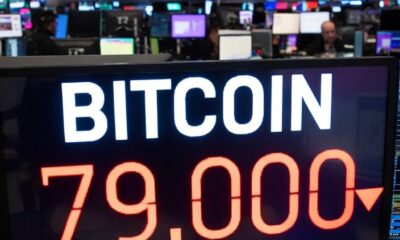

Bitcoin Claws Back Toward $79,000 as Markets Digest Record Binance Hack
Bitcoin extended its recovery for a third consecutive day on November 1–2, 2026, trading at $78,248.45 on CoinMarketCap and pushing...


Bitcoin Slides Below $78,000 as Risk-Off Sentiment Intensifies
Bitcoin fell below $78,000 on October 30, 2026, as confirmation of the Binance security incident accelerated a broader risk-off move...


Stablecoin Issuers and Partners Freeze Billions Linked to Binance Incident
Stablecoin issuers and blockchain partners moved rapidly to freeze billions of dollars in assets tied to the Binance security incident...
-

 Crypto4 weeks ago
ESMA gives EU crypto firms three months to exit non-MiCA stablecoins
-

 Crypto1 month ago
Binance Burns 334.88 Million LUNC in October Fee Batch as Second Transaction Lifts the Day’s Total
-

 Bitcoin3 weeks ago
Strategy (MicroStrategy) Adds 250 Bitcoin, Holdings Reach 848,250 BTC
-

 Bitcoin1 month ago
SEC clears listing path for first U.S. 3x Bitcoin and Ether ETFs
-

 DeFi3 weeks ago
Bitcoin Drops Below $82,000 Amid $770M+ in Liquidations as Volatility Spikes
-
 Bitcoin4 weeks ago
Bitcoin breaks under $84,000 as oil spikes on Hormuz tanker attacks
-

 DeFi4 weeks ago
Government-linked wallets move seized coins
-

 Crypto1 month ago
Treasury and FinCEN drop unhosted-wallet and mixer surveillance proposals
-

 Bitcoin4 weeks ago
Spot bitcoin ETFs flip to a ~$487 million outflow
-

 Bitcoin4 weeks ago
Bitcoin loses $84,000 as Hormuz attacks lift oil and yields
-

 DeFi4 weeks ago
Winklevoss files a 0.25% Zcash ETF
-

 DeFi3 weeks ago
U.S. Spot Bitcoin and Ethereum ETFs See Significant Weekly Outflows
-
DeFi4 weeks ago
Bitcoin Holds Above $84,000, Shrugging Off Heavy ETF Outflows as Oil Declines
-

 DeFi4 weeks ago
Uptober stalls ahead of the Fed minutes
-

 Crypto1 month ago
CFTC opens Regulation CTX and CAM after Clarity Act stalls
-

 Crypto4 weeks ago
Ether funds were already bleeding
-
 DeFi3 weeks ago
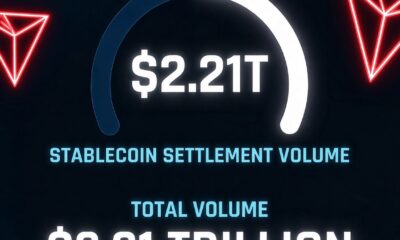
TRON Q3 2026 Report: $2.21 Trillion in Stablecoin Settlement Volume
-

 DeFi2 weeks ago
Arbitrum Rallies on Stablecoin Growth Program as DeFi Tokens Outperform
-
 DeFi3 weeks ago
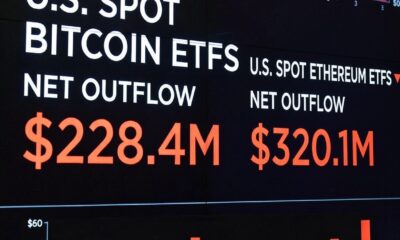
Bitcoin and Ethereum Spot ETFs Record Substantial Weekly Outflows
-
Bitcoin1 month ago
Bitcoin rejected again under $87,400 as Uptober stalls
-

 Bitcoin4 weeks ago
Third rejection at $87,000 while stocks print records
-

 DeFi2 weeks ago
BNB Standard Corporation
-

 Crypto4 weeks ago
Treasuries, triple leverage, a testnet fork, and a bank app
-

 DeFi3 weeks ago
Nine Crypto Firms Launch Quantum Alliance to Set Post-Quantum Standards
-
 DeFi2 weeks ago
Swiss FINMA Approves First Retail Bitcoin ETF Holding BTC Directly
-

 DeFi3 weeks ago
South Korea Blocks Domestic Access to 27 Unregistered Crypto Exchange Websites, Including KuCoin and MEXC
-

 DeFi1 week ago
LUNC Hits 462B Burned After v4.1.1 Upgrade
-

 DeFi2 weeks ago
World Liberty Financial’s USD1 Stablecoin Sheds Over $400 Million in Market Cap Amid Redemptions
-

 DeFi2 weeks ago
Strive Discloses Additional Bitcoin Purchases, Holdings Reach 36,818 BTC
-
 DeFi2 weeks ago
U.S. Spot Bitcoin ETFs Post Best Inflow Day in Nearly a Month
-

 DeFi3 weeks ago
Ethereum Foundation-Linked Wallets Transfer 4,393 ETH (~$11 Million) to Kraken
-

 DeFi3 weeks ago
Inflation Shock Triggers Nearly $1 Billion in Liquidations as Bitcoin Tests $80,000
-

 DeFi2 weeks ago
Binance-Linked Transfer Triggers 347 Million LUNC Burn
-

 DeFi3 weeks ago
Binance Rolls Out AI Trading Interface Globally After 150,000-User Beta
-
 DeFi2 weeks ago
Crypto Hacks and Losses Reach $1.18 Billion in Q3 2026 Across 107 Incidents
-

 DeFi2 weeks ago
Crypto Liquidations Surge Past $400 Million in Hours as Bitcoin Briefly Dips Below $80,000