Learning
What is GameFi?

When you combine the concepts of gaming and decentralised money, you get GameFi. Play-to-Earn (P2E) gaming refers to GameFi, which integrates gaming with blockchain technology aspects such non-fungible tokens (NFTs) and cryptocurrencies to offer players monetary rewards.
This post will define GameFi and discuss some of the most well-known GameFi cryptocurrencies available right now.
Just what does “gaming finance” entail?
The advent of cryptocurrency has allowed online gaming communities to establish economies complete with their own currency and marketplaces, ruled and managed by the players themselves. GameFi has made it possible for gamers to make money through play-to-earn model (P2E) blockchain games.
In a player-to-player (P2P) game, players can buy and sell virtual items with other players. Coins earned in games can be traded for real money on cryptocurrency markets like Binance (BNB) and Coinbase (COIN). Because GameFi projects are hosted on a blockchain, they may easily incorporate DeFi features such as token issuances, farming, NFTs, and peer-to-peer trading. GameFi projects combine a reward system and play-to-earn mechanics to encourage a dedicated fan following, repeat business, and a thriving in-game economy.
When used, how does GameFi function?
First, let’s take a look at the blockchain game Axie Infinity and its in-game tokens, the Axie Infinity Shards (AXS) and the Small Love Potion, to get a feel for how GameFi or play-to-earn operates in practise (SLP).
In many ways, Axie Infinity may be considered its own independent realm. Axies are creatures that can be reared, produced, and traded for the game’s currency, AXS. Each Axie is a non-fungible token (NFT), and its worth on the market is determined by how uncommon its traits are. The progeny of two Axies can be bred to produce a new Axie with a desired trait.
Battle and adventure modes allow players to gain SLP, a resource needed for breeding. Tokens represent ownership of land in Axie Infinity, which can be freely swapped between users. Token holders of both AXS and SLP have the option of trading their tokens for other cryptocurrencies and fiat currency on various exchanges.
To this day, the term “P2E gaming” cannot be mentioned without first thinking of Axie Infinity. In 2020, the blockchain game Axie Infinity gained to prominence when many Filipinos, unable to work because of economic lockdowns caused by the Covid-19 virus, turned to it as a means of making money.
Frequently Used GameFi Tokens
According to Crypto.com’s list of top GameFi currencies by market capitalization, other prominent GameFi tokens include MANA for the virtual world Decentraland, SAND for the metaverse platform The Sandbox, GALA for the blockchain gaming platform Gala, and ENJ for the GameFi NFT platform Enjin.

The content on CoinReporter.io is for informational purposes only and is not financial or investment advice. Cryptocurrency investments are highly volatile and risky. Always conduct your own research and consult a qualified financial advisor before making any investment decisions. CoinReporter.io and its authors are not liable for any losses resulting from actions based on this website’s content.



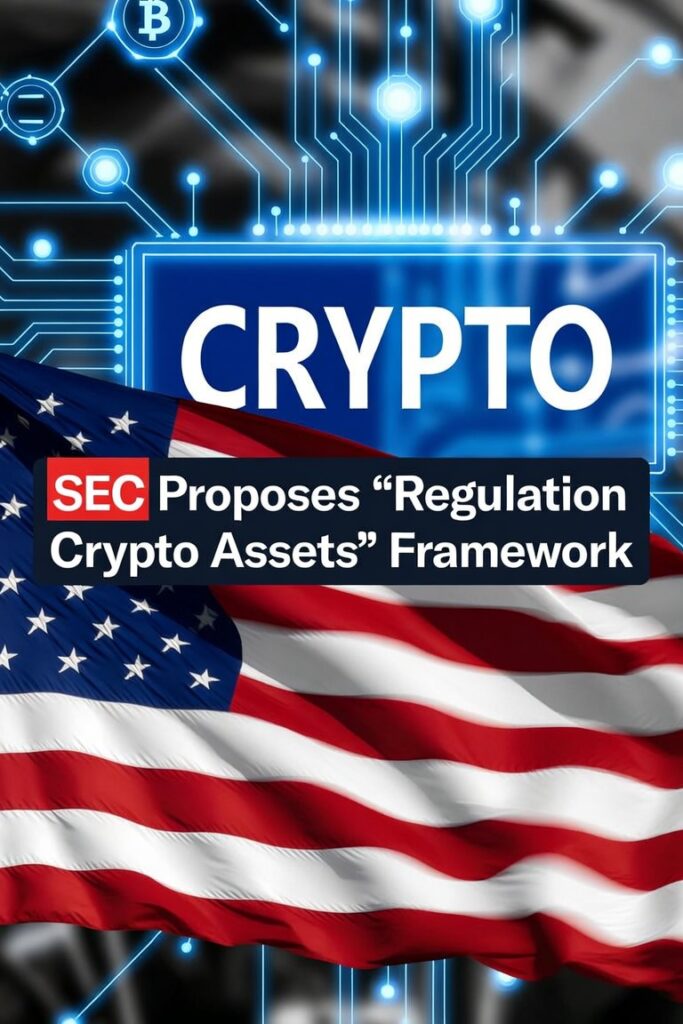
In a notable development, the U.S. Securities and Exchange Commission advanced its first major crypto-specific rule proposal in some time, unveiling the “Regulation Crypto Assets” framework on August 18. The proposal creates a tailored offering regime for certain investment contracts involving crypto assets and arrives amid ongoing debates over market structure legislation, following the earlier cancellation of a related open meeting.
The framework includes two new exemptions from Securities Act registration requirements. A “startup exemption” would permit offerings of up to $5 million during a four-year period. A broader “fundraising exemption” would allow offerings of up to $75 million during each 12-month period, subject to the provision of financial statements and ongoing reporting obligations. Both pathways require principles-based disclosures tailored to crypto assets, while antifraud and antimanipulation provisions of the federal securities laws continue to apply.
In addition, the proposal features a conditional safe harbor. Once an issuer certifies that it has completed or permanently ceased all essential managerial efforts originally promised under the investment contract and satisfies other conditions, the associated non-security crypto asset would no longer be deemed subject to an investment contract—and therefore would fall outside the SEC’s jurisdiction under the relevant definitions of “security.”
SEC Chairman Paul Atkins framed the proposal as a fit-for-purpose response that gives entrepreneurs clearer pathways to raise capital while preserving core investor protections. Commissioners Hester Peirce and Mark Uyeda also issued supportive statements, emphasizing that the rules replace regulatory guesswork with measurable thresholds and defined obligations. The Commission opened a 60-day public comment period after publication in the Federal Register.
The move builds directly on the SEC’s March 2026 interpretive guidance clarifying the application of federal securities laws to crypto assets. Industry groups welcomed the development as a constructive step toward reducing the incentive for projects to operate offshore. On X, reaction was broadly optimistic, with market participants describing the framework as a shift away from regulation-by-enforcement toward clearer rules that could support domestic innovation and capital formation even as broader legislative efforts, including the Clarity Act, face continued headwinds.
While the proposal remains subject to public comment and potential revision before any final rule, it marks a meaningful evolution in the SEC’s approach to crypto fundraising and investment-contract treatment.

Inflation Shock Triggers Nearly $1 Billion in Liquidations as Bitcoin Tests $80,000
Hotter-than-expected U.S. inflation data rattled risk assets on October 15, 2026. September CPI rose 3.7% year-over-year, above the 3.6% forecast...


Bitcoin Drops Below $81,000 as Hotter U.S. CPI Revives Rate-Hike Fears and Asian Equities Tumble
Bitcoin fell sharply below $81,000 in early Asian trading on October 15, 2026, extending losses after a hotter-than-expected U.S. September...


U.S. Spot Bitcoin and Ethereum ETFs See Significant Weekly Outflows
U.S.-listed spot Bitcoin ETFs recorded roughly $681 million in net outflows over the trading week of October 5–9, 2026—the largest...


Binance Rolls Out AI Trading Interface Globally After 150,000-User Beta
Binance launched its free Binance AI personalized trading interface to all English-language users on October 12, 2026, following a beta...


Ethereum Foundation-Linked Wallets Transfer 4,393 ETH (~$11 Million) to Kraken
On October 12, 2026, two wallets historically linked to the Ethereum Foundation transferred a combined 4,393 ETH—valued at approximately $11.13...

TRON Q3 2026 Report: $2.21 Trillion in Stablecoin Settlement Volume
TRON’s State of TRON Q3 2026 report, released in mid-October, highlighted $2.21 trillion (precisely $2.2126 trillion) in stablecoin settlement volume...


South Korea Blocks Domestic Access to 27 Unregistered Crypto Exchange Websites, Including KuCoin and MEXC
South Korea’s Financial Intelligence Unit (FIU), under the Financial Services Commission, announced on October 13, 2026, that domestic access would...


Bitcoin Drops Below $82,000 Amid $770M+ in Liquidations as Volatility Spikes
Bitcoin fell sharply on October 12, 2026, sliding below $82,000 and triggering more than $770 million in cryptocurrency liquidations, the...


Bitcoin Holds Above $84,000, Shrugging Off Heavy ETF Outflows as Oil Declines
Bitcoin rebounded to trade near or above $84,000 on Monday, October 12, 2026, recovering from earlier dips toward the low...


ESMA gives EU crypto firms three months to exit non-MiCA stablecoins
The European Securities and Markets Authority on 8 October told national supervisors that MiCA-authorised crypto firms should stop providing services...
-

 DeFi4 weeks ago
Bitcoin Reclaims $81,000 and Closes Above Key 50-Week Moving Average
-

 DeFi2 weeks ago
Hong Kong Moves Licensed Stablecoins Onto Exchanges and Into Fund Settlement
-
Crypto1 week ago
ESMA gives EU crypto firms three months to exit non-MiCA stablecoins
-

 DeFi3 weeks ago
Coinbase Adds Fixed-Rate Bitcoin-Backed Loans via Morpho Midnight
-

 Crypto2 weeks ago
Binance Burns 334.88 Million LUNC in October Fee Batch as Second Transaction Lifts the Day’s Total
-
 Bitcoin2 weeks ago
SEC clears listing path for first U.S. 3x Bitcoin and Ether ETFs
-
 DeFi2 weeks ago
Robinhood Puts Hedge-Fund Tools in the App as Macro Turns Softer
-

 DeFi2 weeks ago
TOKEN2049 Opens in Singapore Next Week as the City Leads Regional Crypto Flow
-

 DeFi1 month ago
Senate Rejects CLARITY Act Cloture in 49-50 Vote, Dealing Major Blow to U.S. Crypto Market Structure
-

 DeFi2 weeks ago
HSBC Names Its Hong Kong Stablecoin RedCoin, and Starts With PayMe
-

 DeFi3 weeks ago
Solana Advances Alpenglow Upgrade to Public Testnet
-

 Bitcoin3 weeks ago
Strategy Adds Another 1,665 BTC, Lifting Holdings to 847,666
-
 DeFi4 weeks ago
CFTC Submits Crypto Market Rules to White House Amid Congressional Stall
-
 DeFi3 weeks ago
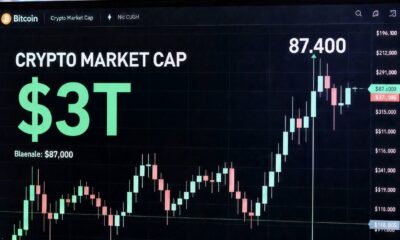
Bitcoin Surges Above $87,000 as Crypto Market Cap Reclaims $3 Trillion
-

 DeFi2 weeks ago
South Korea Ranks Second in On-Chain Crypto Holdings as the Tax Date Holds
-

 DeFi4 weeks ago
Bitcoin Surges Above $87,000 on ETF Inflows and Massive Short Squeeze
-

 Bitcoin1 week ago
Bitcoin breaks under $84,000 as oil spikes on Hormuz tanker attacks
-

 Bitcoin3 weeks ago
Record ETF Inflows and a Short Squeeze Drive Bitcoin’s $87,000 Break
-

 Bitcoin3 weeks ago
Coinbase Receives CFTC Approval for U.S. Derivatives Clearinghouse
-
 Bitcoin3 weeks ago
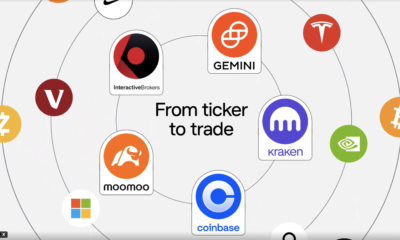
X Partners With Coinbase, Kraken, Gemini and Brokers to Trade From the Timeline
-

 Crypto2 weeks ago
Treasury and FinCEN drop unhosted-wallet and mixer surveillance proposals
-

 DeFi1 month ago
Senate Republicans Release “Final” CLARITY Act Draft Ahead of September 15 Cloture Vote
-

 DeFi2 weeks ago
BTSE Receives a Full Licence to Trade and Custody Crypto in Bhutan
-
DeFi4 days ago
Bitcoin Drops Below $82,000 Amid $770M+ in Liquidations as Volatility Spikes
-

 DeFi4 weeks ago
SEC Opens Pathway for Tokenized U.S. Equities After Legislative Setback
-

 Bitcoin4 weeks ago
Strategy Resumes Bitcoin Buying, Adds 950 BTC
-

 DeFi4 weeks ago
Circle Launches Arc Mainnet with Institutional Validators Including BlackRock and Visa
-

 Bitcoin1 month ago
Metaplanet Reverses Course, Erasing ~$220 Million in Warrant Value
-

 DeFi1 week ago
Government-linked wallets move seized coins
-

 DeFi4 weeks ago
Crypto Market Suffers Broad Decline; Bitcoin Briefly Drops Below $75,000 Before Stabilizing
-

 DeFi4 weeks ago
Avalanche Gains on NYSE Tokenization Testing Reports
-

 Crypto2 weeks ago
CFTC opens Regulation CTX and CAM after Clarity Act stalls
-
DeFi5 days ago
Bitcoin Holds Above $84,000, Shrugging Off Heavy ETF Outflows as Oil Declines
-

 Crypto2 weeks ago
Singapore Reclaims the Regional Crypto Lead at $284 Billion as the Rest of CSAO Shrinks
-

 DeFi4 weeks ago
Federal Reserve
-

 Bitcoin4 weeks ago
Institutional Crypto Infrastructure Advances: Deutsche Bank Custody and Related Moves