Crypto
CME Group Launches XRP and Solana Futures: A Major Step for Institutional Crypto Derivatives

The Chicago Mercantile Exchange (CME) Group has expanded its cryptocurrency derivatives suite with the launch of spot-quoted futures contracts for XRP and Solana (SOL), effective December 17, 2025. These new products—cash-settled and based on CME CF Ripple-Dollar and Solana-Dollar Reference Rates—offer institutional traders regulated tools to hedge or gain exposure to two of the market’s leading altcoins.
The addition follows CME’s established Bitcoin and Ether futures, which have become benchmarks for price discovery and risk management. With daily volumes in existing crypto futures averaging over $10 billion, the XRP and SOL contracts are poised to attract significant interest amid rising demand for diversified, compliant crypto instruments.
Regulated Exposure to High-Growth Altcoins
CME’s spot-quoted design provides transparency through daily reference rates, mitigating concerns over exchange-specific pricing. “These futures deliver efficient, regulated access to XRP and Solana for portfolio managers and institutions,” said Giovanni Vicioso, CME Group Global Head of Cryptocurrency Products. The contracts enable precise hedging against volatility while facilitating arbitrage and basis trading.
Solana, with its high-throughput ecosystem and booming DeFi and memecoin activity, has seen its market cap stabilise above $80 billion. XRP, bolstered by Ripple’s regulatory victories and cross-border payment utility, commands a $120 billion valuation. Both tokens benefit from growing institutional acceptance, with SOL’s network processing over 50 million daily transactions and XRP’s ODL volumes hitting records.
Early trading data shows strong uptake: Combined open interest exceeded $50 million within hours of launch, with institutional players citing improved capital efficiency and compliance advantages over unregulated venues.
A Signal of Crypto’s Institutional Maturation
The launch underscores CME’s confidence in altcoin fundamentals, coming months after Bitcoin and Ether micro futures and amid speculation on spot ETF approvals for SOL and XRP. “This legitimizes Solana and XRP as serious assets,” noted a derivatives analyst at a major hedge fund. Globally, it could influence European and Asian exchanges to deepen crypto offerings, enhancing liquidity and price discovery.
For the $3.2 trillion crypto market, CME’s expansion is a maturing milestone: From Bitcoin’s dominance to diversified derivatives, regulated venues are bridging TradFi and digital assets. As volatility persists, these tools offer stability—potentially catalysing the next leg of institutional inflows in 2026.
Disclaimer
The content on CoinReporter.io is for informational purposes only and is not financial or investment advice. Cryptocurrency investments are highly volatile and risky. Always conduct your own research and consult a qualified financial advisor before making investment decisions. CoinReporter.io and its authors are not liable for any losses resulting from actions based on this website’s content.

The content on CoinReporter.io is for informational purposes only and is not financial or investment advice. Cryptocurrency investments are highly volatile and risky. Always conduct your own research and consult a qualified financial advisor before making any investment decisions. CoinReporter.io and its authors are not liable for any losses resulting from actions based on this website’s content.

The post Elon Musk Predicts SpaceX Could Hit $100T in 10 years — Unless World War Breaks Out appeared first on Coinpedia Fintech News
Elon Musk believes SpaceX could reach a $100 trillion valuation within the next decade, far above billionaire investor Ron Baron’s estimate of $20 trillion to $50 trillion. However, Musk sees one major threat to that goal, a world war. Baron also expects Starlink alone to reach a $15 trillion valuation as satellite internet and space-based …


Bitcoin Drops Below $81,000 as Hotter U.S. CPI Revives Rate-Hike Fears and Asian Equities Tumble
Bitcoin fell sharply below $81,000 in early Asian trading on October 15, 2026, extending losses after a hotter-than-expected U.S. September...


U.S. Spot Bitcoin and Ethereum ETFs See Significant Weekly Outflows
U.S.-listed spot Bitcoin ETFs recorded roughly $681 million in net outflows over the trading week of October 5–9, 2026—the largest...


Binance Rolls Out AI Trading Interface Globally After 150,000-User Beta
Binance launched its free Binance AI personalized trading interface to all English-language users on October 12, 2026, following a beta...


Ethereum Foundation-Linked Wallets Transfer 4,393 ETH (~$11 Million) to Kraken
On October 12, 2026, two wallets historically linked to the Ethereum Foundation transferred a combined 4,393 ETH—valued at approximately $11.13...
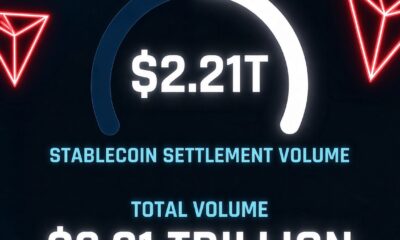

TRON Q3 2026 Report: $2.21 Trillion in Stablecoin Settlement Volume
TRON’s State of TRON Q3 2026 report, released in mid-October, highlighted $2.21 trillion (precisely $2.2126 trillion) in stablecoin settlement volume...


South Korea Blocks Domestic Access to 27 Unregistered Crypto Exchange Websites, Including KuCoin and MEXC
South Korea’s Financial Intelligence Unit (FIU), under the Financial Services Commission, announced on October 13, 2026, that domestic access would...


Bitcoin Drops Below $82,000 Amid $770M+ in Liquidations as Volatility Spikes
Bitcoin fell sharply on October 12, 2026, sliding below $82,000 and triggering more than $770 million in cryptocurrency liquidations, the...


Bitcoin Holds Above $84,000, Shrugging Off Heavy ETF Outflows as Oil Declines
Bitcoin rebounded to trade near or above $84,000 on Monday, October 12, 2026, recovering from earlier dips toward the low...


ESMA gives EU crypto firms three months to exit non-MiCA stablecoins
The European Securities and Markets Authority on 8 October told national supervisors that MiCA-authorised crypto firms should stop providing services...


Uptober stalls ahead of the Fed minutes
Seasonality lost to bonds. October has been positive for bitcoin in 10 of the past 13 years, and 21Shares had...
-

 DeFi3 weeks ago
Bitcoin Reclaims $81,000 and Closes Above Key 50-Week Moving Average
-

 DeFi2 weeks ago
Hong Kong Moves Licensed Stablecoins Onto Exchanges and Into Fund Settlement
-
Crypto6 days ago
ESMA gives EU crypto firms three months to exit non-MiCA stablecoins
-

 DeFi3 weeks ago
Coinbase Adds Fixed-Rate Bitcoin-Backed Loans via Morpho Midnight
-

 Crypto2 weeks ago
Binance Burns 334.88 Million LUNC in October Fee Batch as Second Transaction Lifts the Day’s Total
-

 DeFi2 weeks ago
Robinhood Puts Hedge-Fund Tools in the App as Macro Turns Softer
-

 DeFi2 weeks ago
TOKEN2049 Opens in Singapore Next Week as the City Leads Regional Crypto Flow
-

 Bitcoin1 week ago
SEC clears listing path for first U.S. 3x Bitcoin and Ether ETFs
-

 DeFi4 weeks ago
Senate Rejects CLARITY Act Cloture in 49-50 Vote, Dealing Major Blow to U.S. Crypto Market Structure
-

 DeFi2 weeks ago
HSBC Names Its Hong Kong Stablecoin RedCoin, and Starts With PayMe
-

 Bitcoin2 weeks ago
Strategy Adds Another 1,665 BTC, Lifting Holdings to 847,666
-

 DeFi3 weeks ago
Solana Advances Alpenglow Upgrade to Public Testnet
-
 DeFi3 weeks ago
CFTC Submits Crypto Market Rules to White House Amid Congressional Stall
-

 DeFi2 weeks ago
South Korea Ranks Second in On-Chain Crypto Holdings as the Tax Date Holds
-
 DeFi3 weeks ago
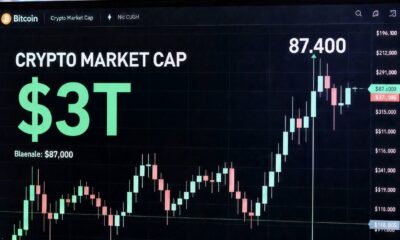
Bitcoin Surges Above $87,000 as Crypto Market Cap Reclaims $3 Trillion
-

 DeFi3 weeks ago
Bitcoin Surges Above $87,000 on ETF Inflows and Massive Short Squeeze
-

 Bitcoin3 weeks ago
Record ETF Inflows and a Short Squeeze Drive Bitcoin’s $87,000 Break
-
 Bitcoin1 week ago
Bitcoin breaks under $84,000 as oil spikes on Hormuz tanker attacks
-

 Bitcoin2 weeks ago
Coinbase Receives CFTC Approval for U.S. Derivatives Clearinghouse
-

 Bitcoin3 weeks ago
X Partners With Coinbase, Kraken, Gemini and Brokers to Trade From the Timeline
-

 DeFi1 month ago
Senate Republicans Release “Final” CLARITY Act Draft Ahead of September 15 Cloture Vote
-

 Crypto1 week ago
Treasury and FinCEN drop unhosted-wallet and mixer surveillance proposals
-

 DeFi2 weeks ago
BTSE Receives a Full Licence to Trade and Custody Crypto in Bhutan
-

 DeFi4 weeks ago
SEC Opens Pathway for Tokenized U.S. Equities After Legislative Setback
-

 Bitcoin3 weeks ago
Strategy Resumes Bitcoin Buying, Adds 950 BTC
-

 DeFi4 weeks ago
Circle Launches Arc Mainnet with Institutional Validators Including BlackRock and Visa
-

 Bitcoin1 month ago
Metaplanet Reverses Course, Erasing ~$220 Million in Warrant Value
-

 DeFi7 days ago
Government-linked wallets move seized coins
-

 DeFi4 weeks ago
Crypto Market Suffers Broad Decline; Bitcoin Briefly Drops Below $75,000 Before Stabilizing
-

 DeFi3 weeks ago
Avalanche Gains on NYSE Tokenization Testing Reports
-

 DeFi4 weeks ago
Federal Reserve
-
 Crypto1 week ago
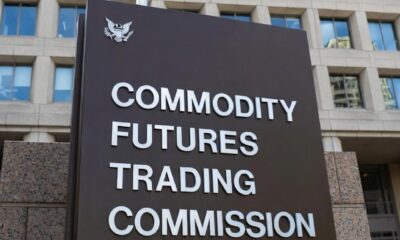
CFTC opens Regulation CTX and CAM after Clarity Act stalls
-

 DeFi4 weeks ago
Crypto Markets Slide as Clarity Failure, Rising Yields and Oil Prices Weigh; Bitcoin Briefly Tests Below $75,000
-

 Crypto2 weeks ago
Singapore Reclaims the Regional Crypto Lead at $284 Billion as the Rest of CSAO Shrinks
-

 Bitcoin4 weeks ago
Institutional Crypto Infrastructure Advances: Deutsche Bank Custody and Related Moves
-

 Bitcoin1 month ago
Bitcoin Spot ETFs Record $463 Million in Outflows