Crypto
Ethereum Rivals Cardano With Upcoming Upgrades as Markets Rally


The post Ethereum Rivals Cardano With Upcoming Upgrades as Markets Rally appeared first on Coinpedia Fintech News
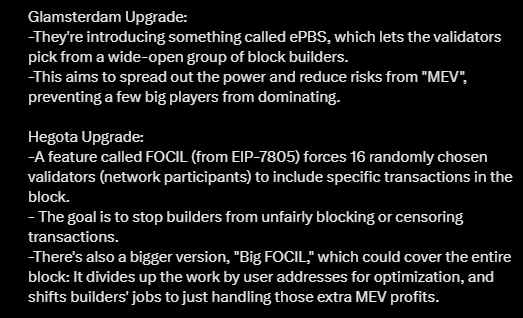
Ethereum plans on implementing Proposer-Builder Separation (ePBS) and Fork-Choice-Enforced Inclusion Lists (FOCIL) within this year’s Glamsterdam and Hegota upgrades. Both aim to uphold network decentralization and scalability while increasing speed, privacy, and security.
PBS will roll out first with the Glamsterdam fork scheduled for the first half of this year. The feature will further separate block builders and validators on Ethereum, preventing large validators from monopolizing and profiting from select transactions, a concept referred to as Maximal Extractable Value (MEV).
On the other hand, FOCIL (EIP-7805), scheduled for the 2nd half of 2026, will compel 16 randomly chosen validators to include certain transactions in their block. This will prevent transaction blocking or censoring on the grounds of perceived profitability.
Ethereum rivals Cardano in network development
In early 2026, Ethereum’s MEV rose to about $24 million in a single month. While profitable for validators, revenue-driven approaches such as front-running and sandwiching resulted in increased network congestion and gas fees for users.
PBS distributes validator power, mitigating MEV-induced centralization that was typically associated with large validators. A bigger version of FOCIL, simply known as “Big FOCIL,” would offer the same benefits as its parent, only on a much larger scale.
Source: X
Rival chain Cardano plans on offering similar benefits with the upcoming Midnight sidechain. The chain would leverage a dual tokenomics system that would enable users to hide sensitive information, including account transactions and balances. This development would also separate private and public computations, making Cardano less congested and effectively lowering gas fees. Midnight will also be regulatory compliant, which will encourage adoption among privacy-centric institutions.
ETH and ADA prices
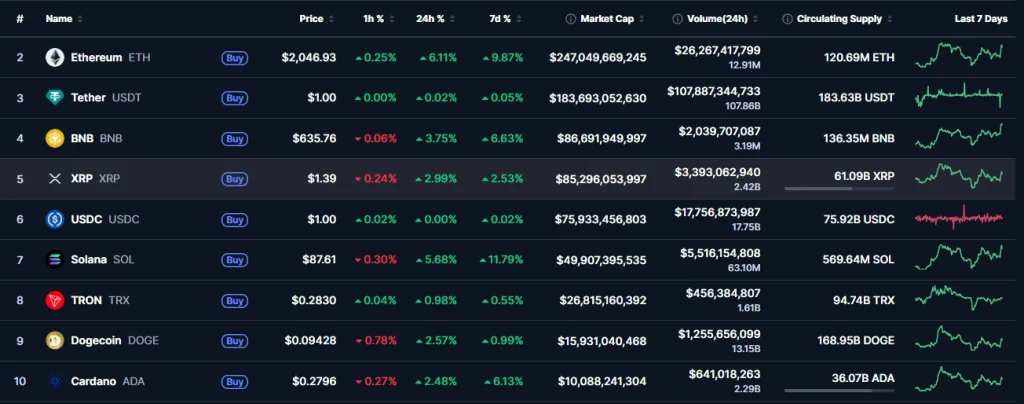
At press time, both ETH (2nd by market cap) and ADA (10th by market cap) showed positive price movement following the recent broad relief rally. ETH traded at $2,042, up 6%, while ADA traded at $0.28, up 2.70% in the last 24h. Cardano also showed positive market sentiment, following the recent launch of its USDC-backed stablecoin, USDCx.
Since the two altcoins move in lockstep with Bitcoin, their future price action largely relies on whether BTC will break above $70K.
Source: CoinMarketCap

The content on CoinReporter.io is for informational purposes only and is not financial or investment advice. Cryptocurrency investments are highly volatile and risky. Always conduct your own research and consult a qualified financial advisor before making any investment decisions. CoinReporter.io and its authors are not liable for any losses resulting from actions based on this website’s content.
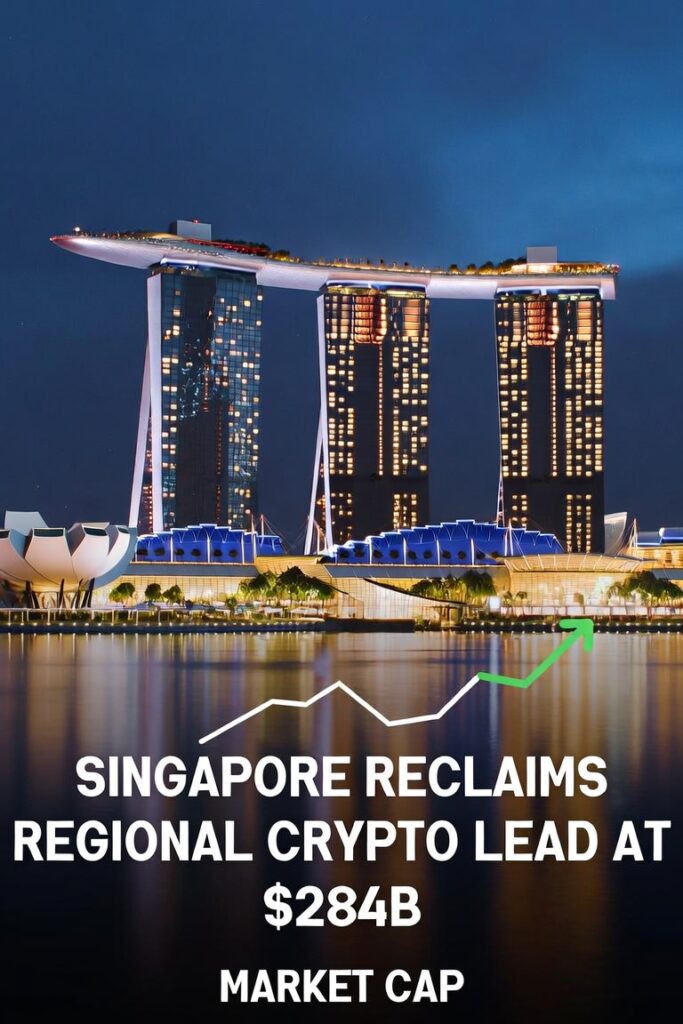
Singapore is again the largest crypto economy in Central and Southeast Asia and Oceania. Chainalysis put activity there at $284 billion in the year to June 2026, up 55.4%. The wider region contracted 6.8% over the same window, July 2025 through June 2026.
The jump was not a retail wave. Institutional-platform activity rose 94% to $60 billion, concentrated in a small set of market makers, over-the-counter desks and institutional brokerages. Chainalysis told Cointelegraph the growth was “mostly high-volume activity by existing platforms rather than the dynamic entry of new services.” Outside that book, flows into centralized exchanges rose 30% and flows into decentralized exchanges rose 69%. Both moved. Neither explains the headline.
Australia was second at $173.1 billion. Total activity there fell 5.6%, mostly on a drop in DEX flows, while institutional-platform activity rose 33.3% to about $39.9 billion. India was still large, at $135 billion, but down 14.7% — one of the sharper declines in the set. It kept the region’s biggest centralized-exchange inflows, $88.4 billion, ahead of Singapore’s $82.3 billion and Australia’s $79.3 billion. Vietnam was fourth at $122.2 billion, then Indonesia at $83.2 billion, Thailand at $82.8 billion and the Philippines at $44.5 billion.
The other half of the report is the opposite market. The Philippines, Thailand and Vietnam together logged 5.4 million peer-to-peer transfers under $10,000, domestic and cross-border. That is 14.4% of such transfers worldwide, from countries that are 2.5% of the global crypto economy. Thailand and Vietnam also ran sizable domestic stablecoin markets, $10.4 billion and $6.9 billion. Cross-border stablecoin flow was larger than domestic in those markets. Chainalysis tied that to speed, cost and ease of use, not to a trading desk in Raffles Place.
Read together, the region split. Singapore’s number is a financial-center number: existing institutional pipes, more volume through them, plus broader exchange flow while the Monetary Authority of Singapore has been tightening licensing and still backing tokenization and stablecoin settlement. India’s number is an exchange-inflow number that shrank at the top line. The Mekong and Philippine number is small tickets. Institutional platforms across CSAO processed $152.3 billion, up 40%, and took 18.9% of regional activity by the end of the second quarter. That share is rising. It is not the same thing as adoption.


TOKEN2049 Opens in Singapore Next Week as the City Leads Regional Crypto Flow
TOKEN2049 runs October 7–8 at Marina Bay Sands. Organisers expect more than 25,000 people, from more than 7,000 companies and...


BTSE Receives a Full Licence to Trade and Custody Crypto in Bhutan
BTSE has a full financial-services licence in Gelephu Mindfulness City. The company said on September 29 that the Gelephu Financial...


South Korea Ranks Second in On-Chain Crypto Holdings as the Tax Date Holds
South Korea is second only to the United States in cryptocurrency that can be measured sitting in wallets and on...


HSBC Names Its Hong Kong Stablecoin RedCoin, and Starts With PayMe
HSBC named the stablecoin it has not yet issued. On September 30 the bank said the Hong Kong-dollar token will...


Hong Kong Moves Licensed Stablecoins Onto Exchanges and Into Fund Settlement
Hong Kong’s stablecoin law is already in force. The September policy address is the next step: the tokens those licences...


Japan’s Licensed Yen Stablecoin Traded at Four Times Its Peg on Upbit
JPYC, the first yen stablecoin licensed in Japan, opened on Upbit on September 17 and briefly traded at about four...


South Korea Sets Capital and Ledger Rules for Tokenized Stocks and Bonds
The Financial Services Commission published the subordinate rules that would let tokenized securities start in Korea on February 4, 2027....


Singapore Reclaims the Regional Crypto Lead at $284 Billion as the Rest of CSAO Shrinks
Singapore is again the largest crypto economy in Central and Southeast Asia and Oceania. Chainalysis put activity there at $284...


UK FCA Opens Crypto Licensing Gateway, Giving Firms Until February 2027 to File
The Financial Conduct Authority opened its crypto authorisation gateway on September 30, the first time UK crypto firms can apply...


Robinhood Puts Hedge-Fund Tools in the App as Macro Turns Softer
Robinhood used HOOD Summit in Houston to do what the brokerage has been signaling all year: stop being only a...
-

 Crypto4 weeks ago
Binance Completes 48th Monthly LUNC Burn as BNB Chain Marks Six Years
-

 DeFi2 weeks ago
Bitcoin Reclaims $81,000 and Closes Above Key 50-Week Moving Average
-

 DeFi3 weeks ago
Solana Sets Record with Over 263,000 New Tokens Minted in a Single Day
-

 DeFi1 month ago
Tokenized Stock Volume Jumps 415% in a Month as Holder Base Explodes
-

 Bitcoin1 month ago
Strategy Ends 10-Week Pause, Buys 4,603 BTC for $369.7 Million
-

 Crypto4 weeks ago
Arbitrum (ARB) Surges Nearly 30% as Robinhood Chain Revenue Explodes
-

 Crypto1 month ago
Stellar’s Tokenized RWA Market Quadruples to Nearly $4 Billion
-

 Bitcoin1 month ago
Bitcoin Delivers Strongest August Since 2017 as Rally Digests Macro Signals
-

 Bitcoin1 month ago
Spot Crypto ETFs Attract Over $2 Billion in Weekly Net Inflows
-
 DeFi3 weeks ago
Visa Stablecoin Settlement Volume Hits $20 Billion Annualized Run Rate
-

 DeFi4 weeks ago
Chainlink Partners with Bottomline to Enable Cross-Chain Payments for 600+ Banks
-

 DeFi4 weeks ago
Dash Leads Privacy Coin Rally with Massive Gains
-

 DeFi4 weeks ago
Zcash Breaks $1,000 for First Time in Nearly a Decade on ETF Momentum
-

 DeFi1 week ago
Coinbase Adds Fixed-Rate Bitcoin-Backed Loans via Morpho Midnight
-

 DeFi4 weeks ago
NYSE Owner ICE Bets on tZERO to Advance Tokenized Securities Infrastructure
-

 DeFi4 weeks ago
CME Overtakes Other Venues to Become Leading XRP Futures Market
-

 DeFi4 weeks ago
Macro Pressure Intensifies: Rising Yields, Oil Spike, and Fed Hike Odds Weigh on Risk Assets
-

 Bitcoin3 weeks ago
Block (Jack Dorsey) Applies for U.S. Trust Bank Charter
-

 Crypto1 month ago
Bitwise Solana ETF (BSOL) Becomes First to Cross $1 Billion in Assets
-

 DeFi3 weeks ago
First U.S. Staked TRX ETF (Canary TRXS) Debuts
-

 Bitcoin1 month ago
Strive Acquires 1,800 BTC for $143 Million, Enters Top Five Corporate Holders
-

 Bitcoin4 weeks ago
Bitcoin Slips Below $80,000 After Strong U.S. Jobs Report Despite Record ETF Inflows
-

 DeFi3 weeks ago
Senate Republicans Release “Final” CLARITY Act Draft Ahead of September 15 Cloture Vote
-

 DeFi3 weeks ago
Ethereum Advances Plans for Gas Payments Without Holding ETH
-

 DeFi4 weeks ago
London Stock Exchange Partners with Kraken Parent to Tokenize Top UK Stocks
-
DeFi1 week ago
Bitcoin Surges Above $87,000 on ETF Inflows and Massive Short Squeeze
-

 Bitcoin1 week ago
X Partners With Coinbase, Kraken, Gemini and Brokers to Trade From the Timeline
-

 Bitcoin3 weeks ago
Liquid Network Exploit: 4,000 BTC Drained, 3,400 Returned in White-Hat Negotiation
-
 DeFi1 week ago
Bitcoin Surges Above $87,000 as Crypto Market Cap Reclaims $3 Trillion
-

 DeFi2 weeks ago
SEC Opens Pathway for Tokenized U.S. Equities After Legislative Setback
-
 DeFi2 weeks ago
CFTC Submits Crypto Market Rules to White House Amid Congressional Stall
-

 Bitcoin3 weeks ago
Crypto Market Faces Pressure as Bitcoin Tests Support Near $78K Amid Macro Headwinds
-

 DeFi2 weeks ago
Circle Launches Arc Mainnet with Institutional Validators Including BlackRock and Visa
-

 DeFi3 weeks ago
Bitmine Immersion Continues Aggressive ETH Accumulation
-

 Bitcoin1 month ago
Bitcoin ETF Inflow Streak Ends Amid Hawkish Fed Commentary
-

 DeFi3 weeks ago
Circle to Acquire Tazapay for $400 Million